THE SEVENTH MATERIAL · SUSTAINABILITY
Every environmental figure on this page carries its boundary.
The Seventh Material saves material before it saves anything else. Here is how much, on which project, and how it was measured.
Building and construction take nearly half of what the world extracts.
According to the Global Status Report for Buildings and Construction 2025-2026, published by UNEP and the Global Alliance for Buildings and Construction, the sector accounts for nearly 50 per cent of global material extraction, 37 per cent of global emissions and 28 per cent of global energy use. Material is where the sector weighs most. That is where The Seventh Material acts, and this page states by how much.

Weight decides everything that follows.
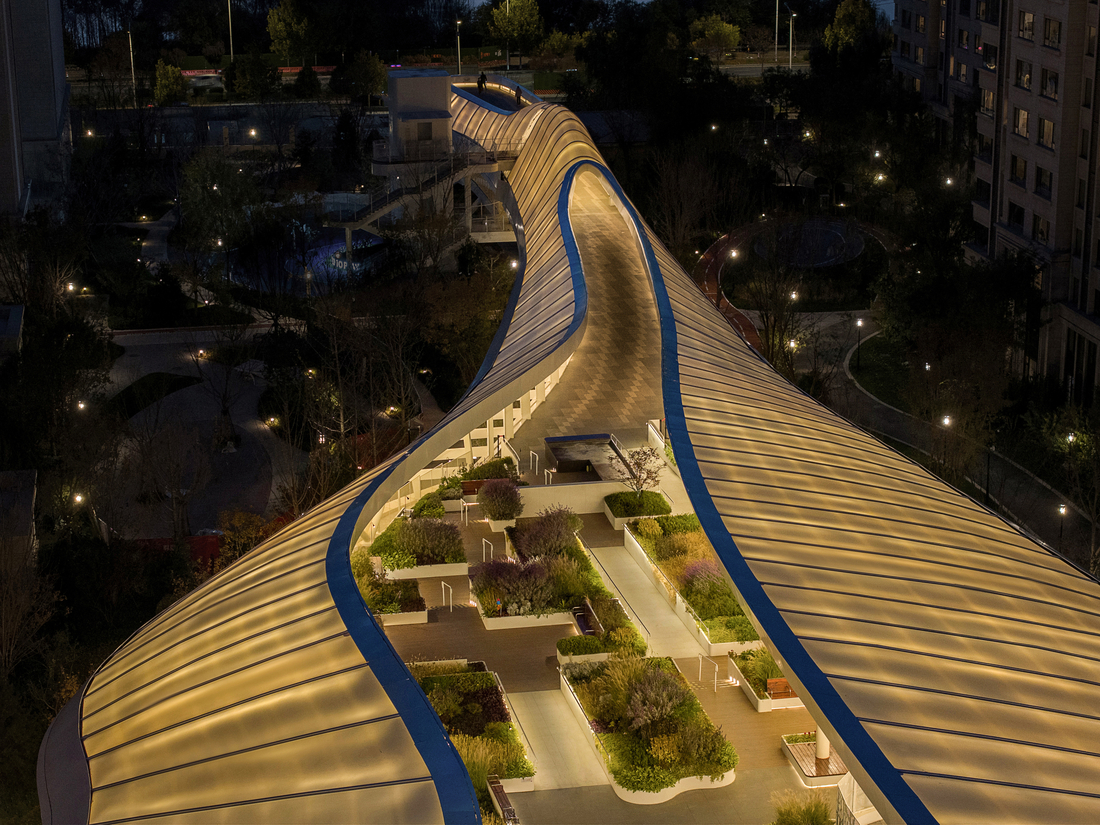
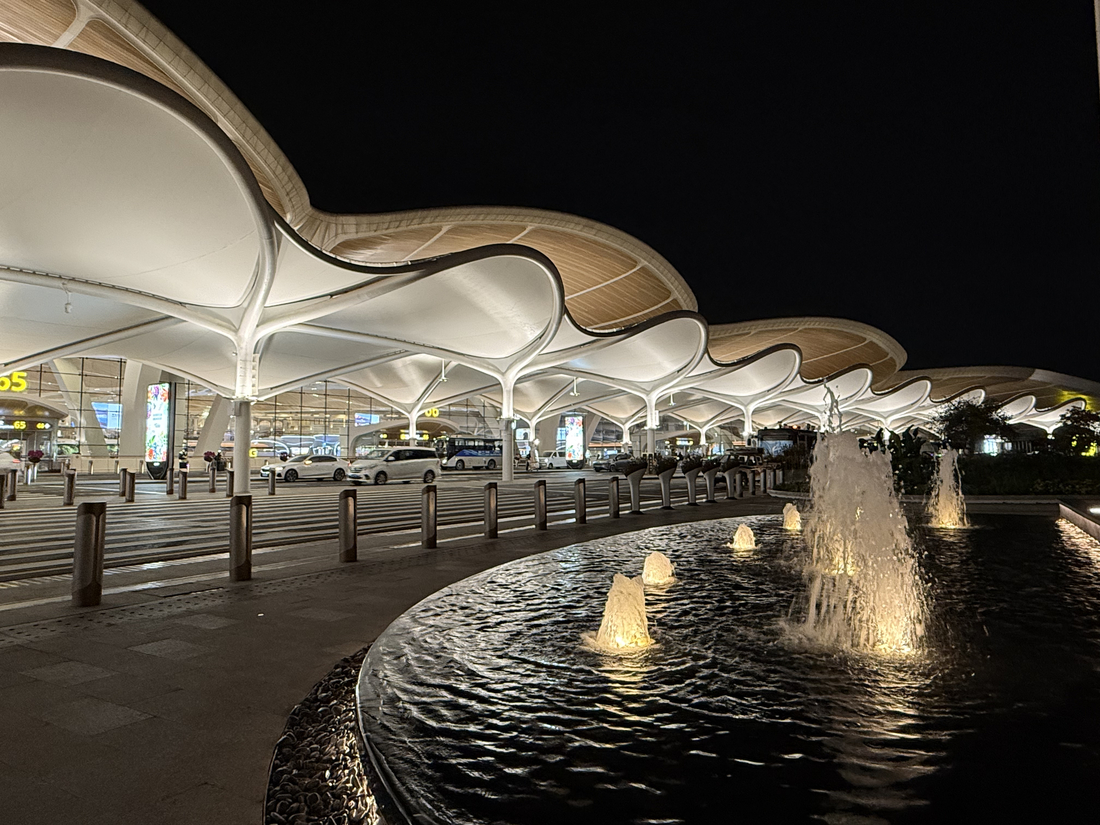
A tensioned membrane does not call for the same frame as a solid material, or the same roof structure as steel. At the Chrifia Golf Club House, structure and cover together weigh 4.5 kg per square metre, against 45 for the metal option on the same project. The Seventh Material lightens what carries it first. That is where its carbon saving starts.
On the same project, a comparative life cycle assessment over fifty years puts the metal option at 75 kg CO2 eq. per square metre, with no replacement but with metal maintenance. The membrane options come in at 21 kg with the membrane replaced at 25 years, and 19.4 kg with replacement at 30 years.
Three options, one project, one boundary: structure and cover, fifty years, per square metre. The study is internal to Serge Ferrari, not published and not third party verified. We say so rather than round it.
In 1998 the company developed Texyloop, a process for recycling its own fabrics, when recycled polyester found no buyer. The plant at Ferrara recycled more than thirteen million square metres in ten years, then closed in 2018 when its industrial partner withdrew. The loop restarted in units the size of a container. It feeds a range woven from fully recycled polyester yarn, from PET bottles and production offcuts. Current recycling capacity is not published. Two fabrics never needed unmaking: the membrane of the Japanese pavilion at Expo 2020 in Dubai was used again at Expo Osaka, and a banner printed for the Jazz à Vienne festival became a deck chair.
We measured before the market asked.
Serge Ferrari ran its first life cycle assessments in 2011. They showed that 70 to 80 per cent of a product’s environmental impact sits upstream, in the production of raw materials. That finding changed what the company buys: it moved purchasing towards recycled raw material and secured sustainable supply. The measurement came first, and the decision followed.
Every product has an EPD.
Those life cycle assessments are now published as Environmental Product Declarations to EN 15804, covering 100 per cent of the Serge Ferrari range, and as FDES for the French market. The company also holds ISO 9001, ISO 14001 and ISO 50001 certificates issued by AFNOR. With an EPD, a specifier can calculate the impact of a finished product, or of a whole building that uses the membrane.
That is what they are for: the figures stop being ours and become yours to check.