Beijing
China
A futuristic architectural envelope for the Beijing Yongfeng Digital Technology Center
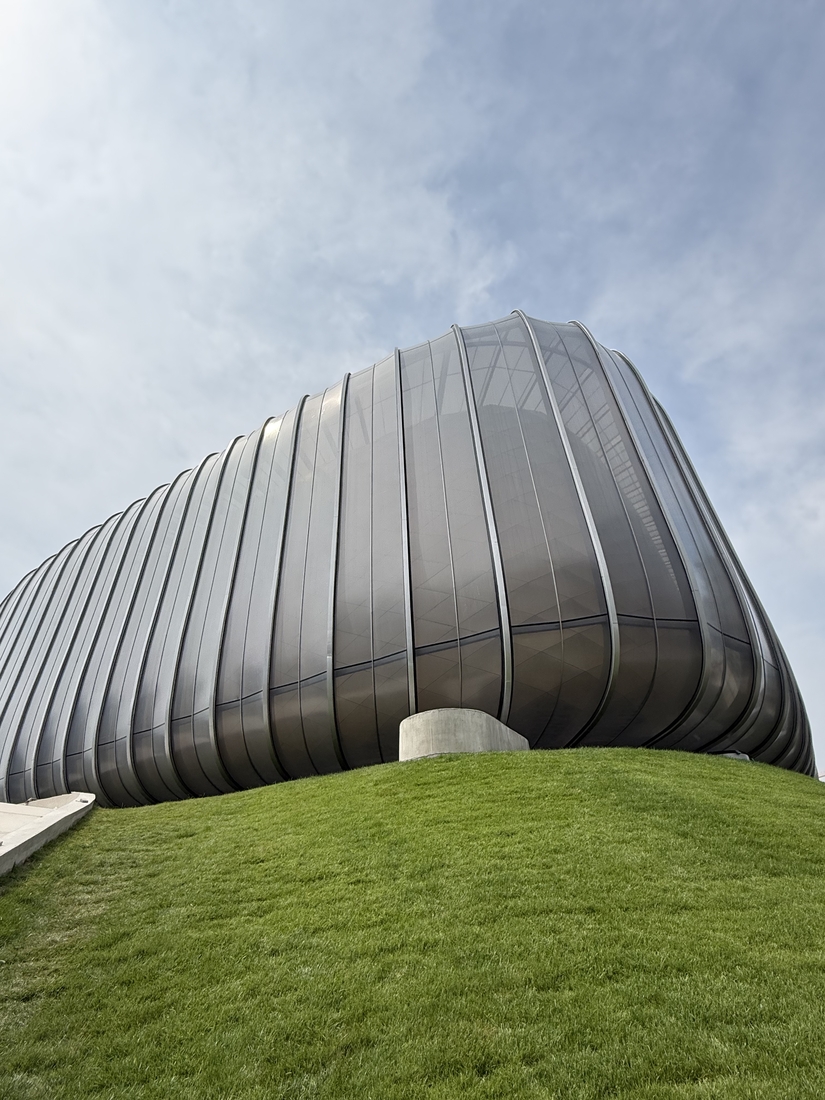
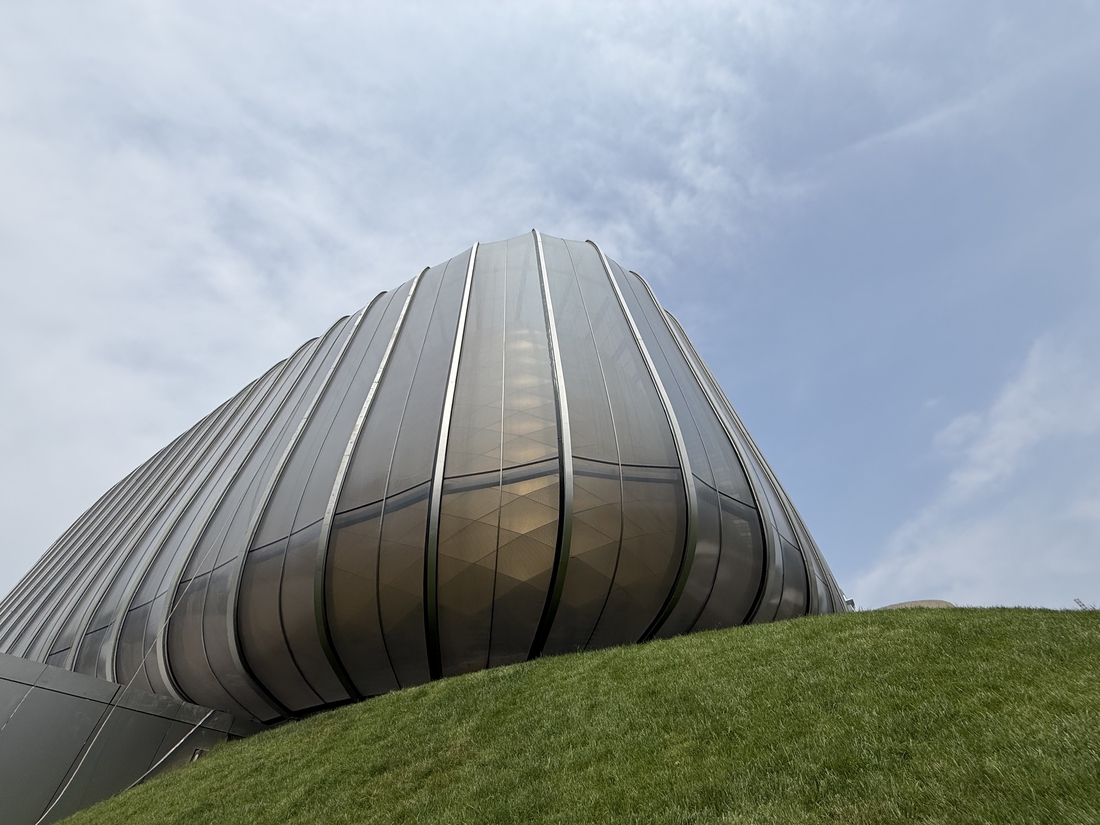
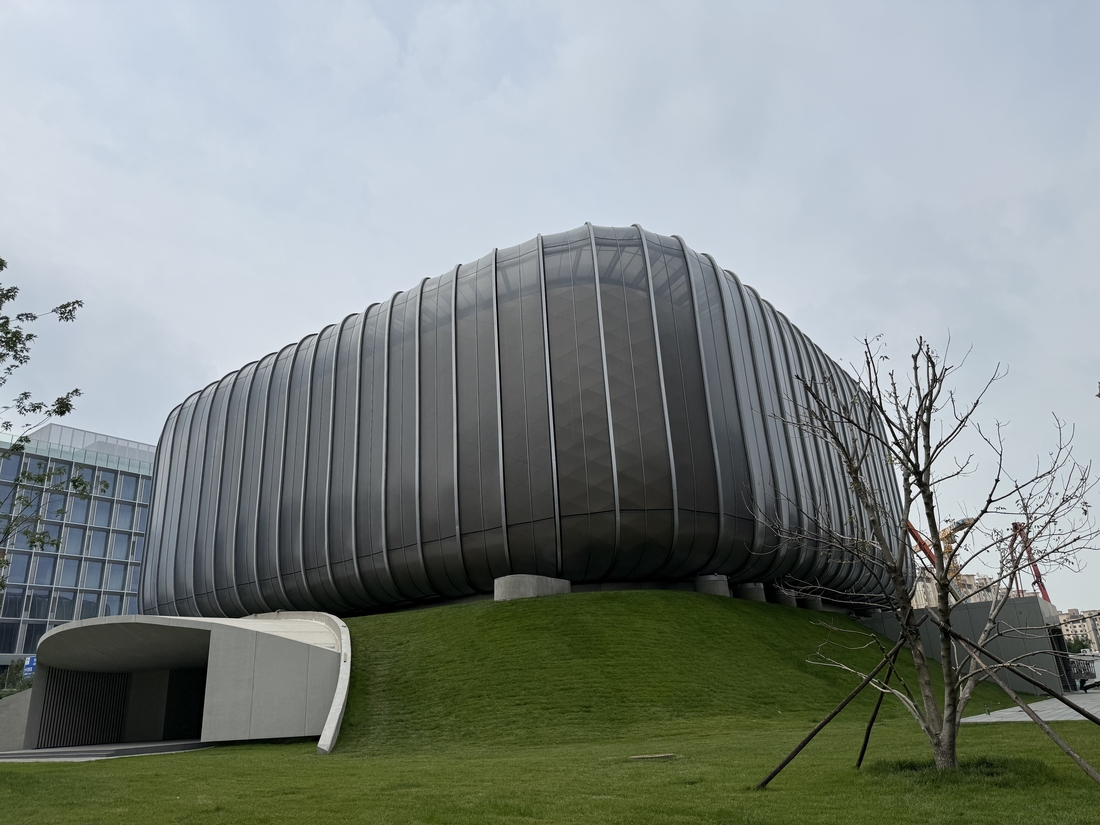
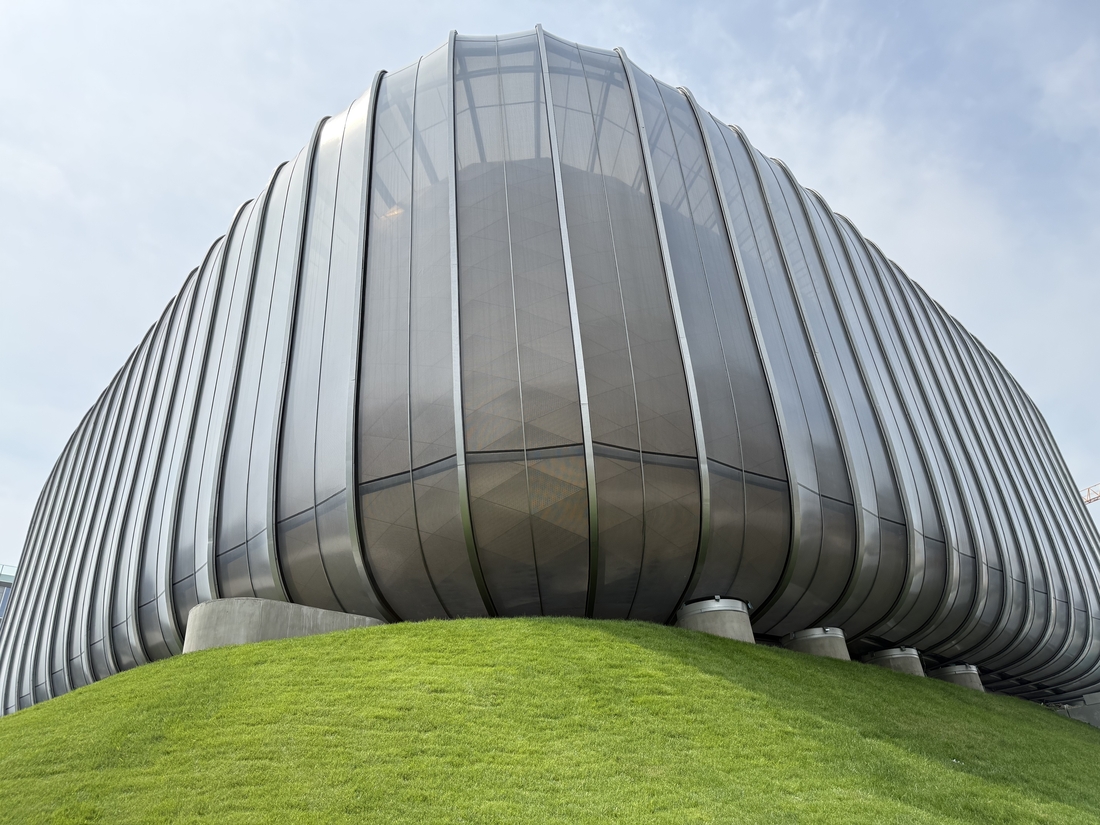
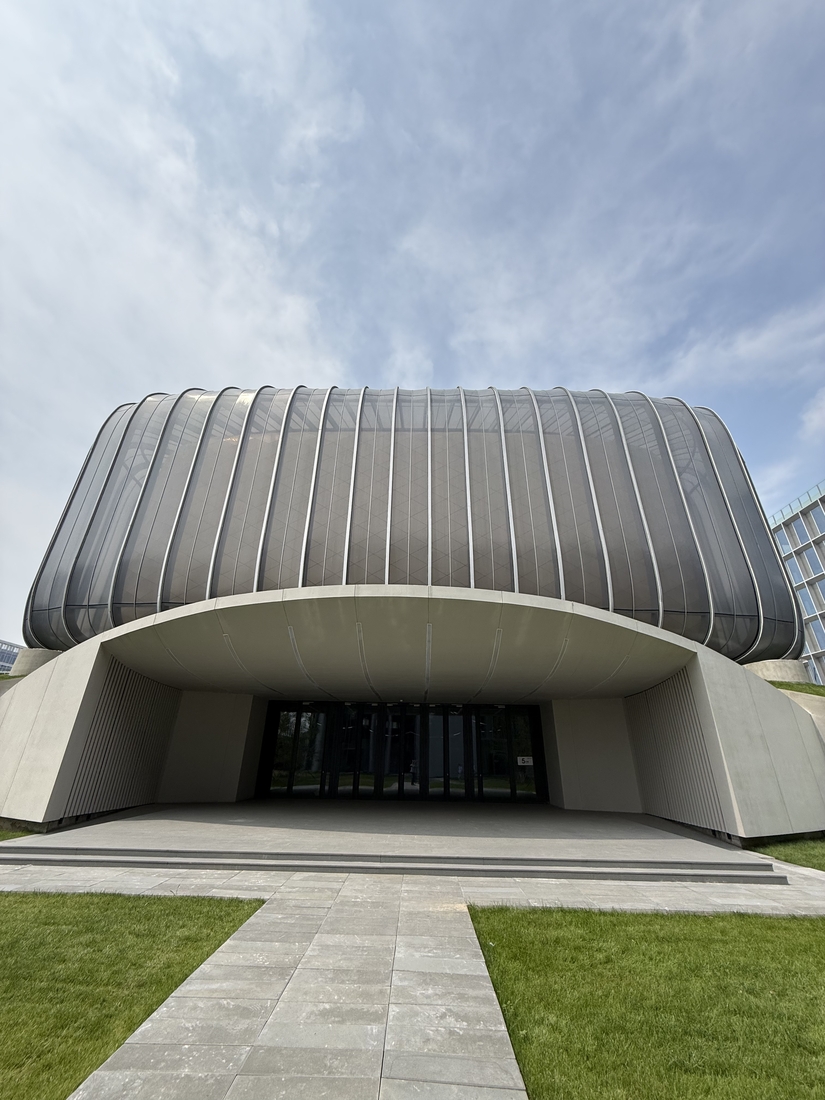
In Beijing, the Yongfeng Digital Technology Center represents a new generation of campus, where innovation goes hand in hand with openness and sustainability. Its landmark building, the Urban Living Room, features a fluid, curved envelope made of Tenseo Xtrem STFE 50. This composite membrane offers the transparency of glass at a fraction of its weight and opens up new architectural possibilities.
A transparent envelope for an innovation-driven project
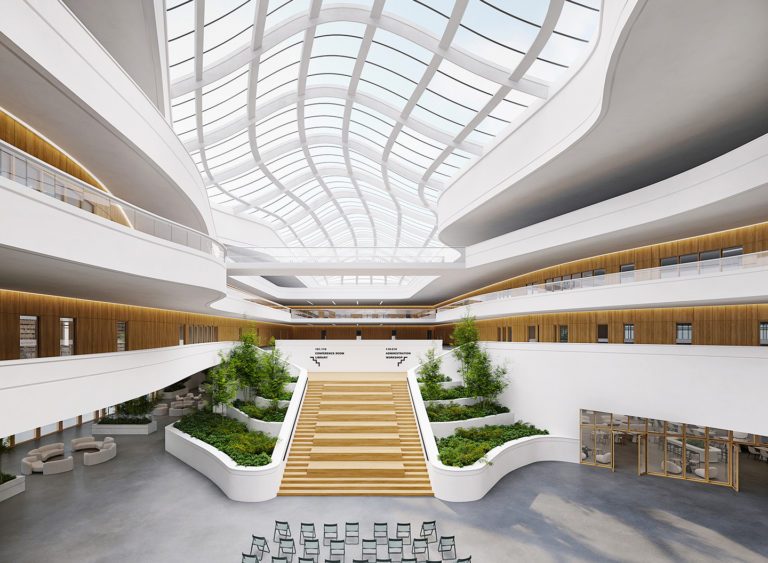
Located in the north of Beijing’s Haidian District, the Yongfeng Digital Technology Center is a modern innovation campus built around three core principles: openness, sustainability and innovation. It brings together high-tech workspaces, public spaces and green areas that combine to form a true urban ecosystem.
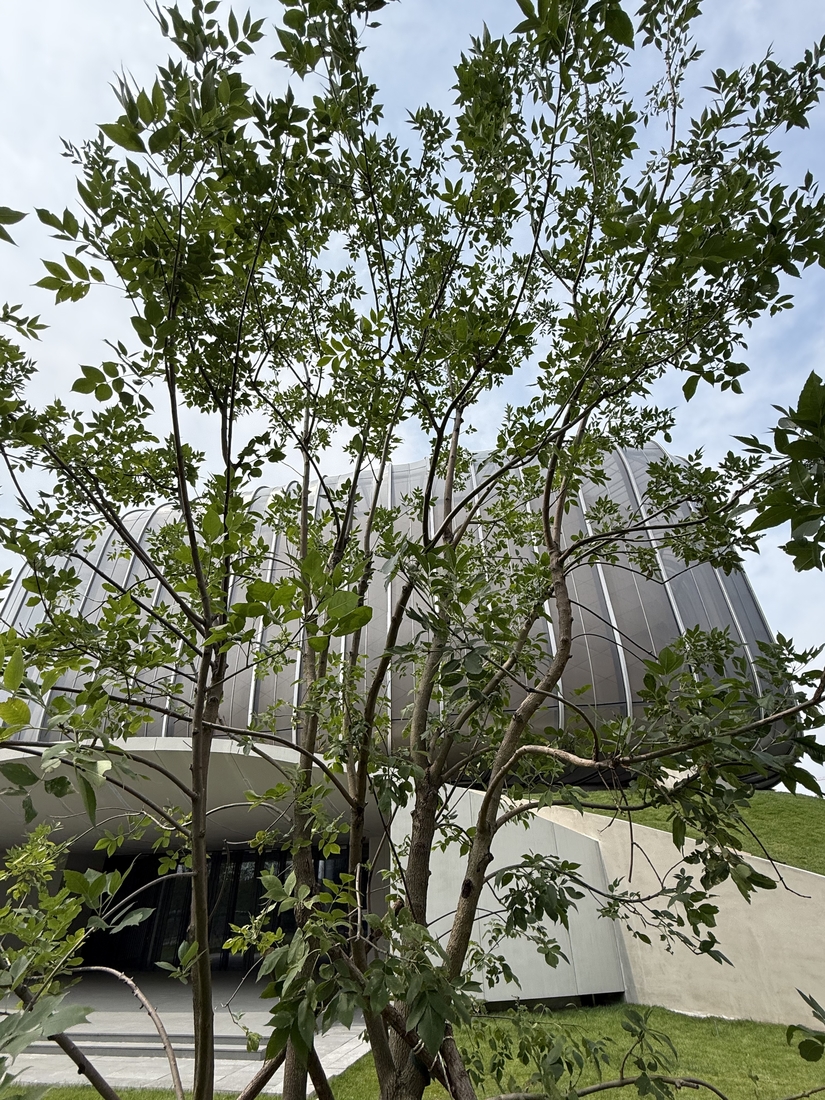
At the heart of the campus, the Urban Living Room is one of its landmark buildings. Its fluid, organic lines set it apart, and its curved façades give it a light, distinctly contemporary silhouette. This airy, technological look owes much to the materials chosen for its envelope.
A transparent composite membrane for a lightweight architectural expression
The building’s outer façade features around 7,700 m² of Tenseo Xtrem STFE 50, a membrane developed specifically for lightweight architectural envelopes.
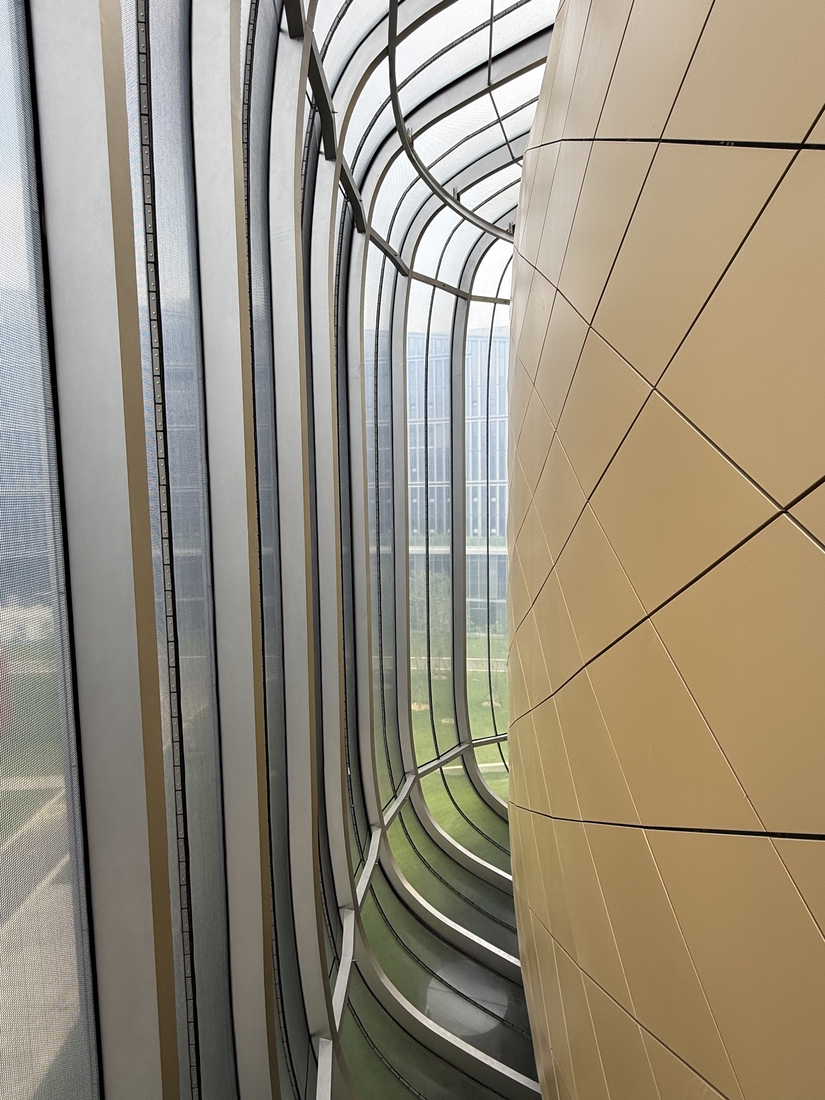
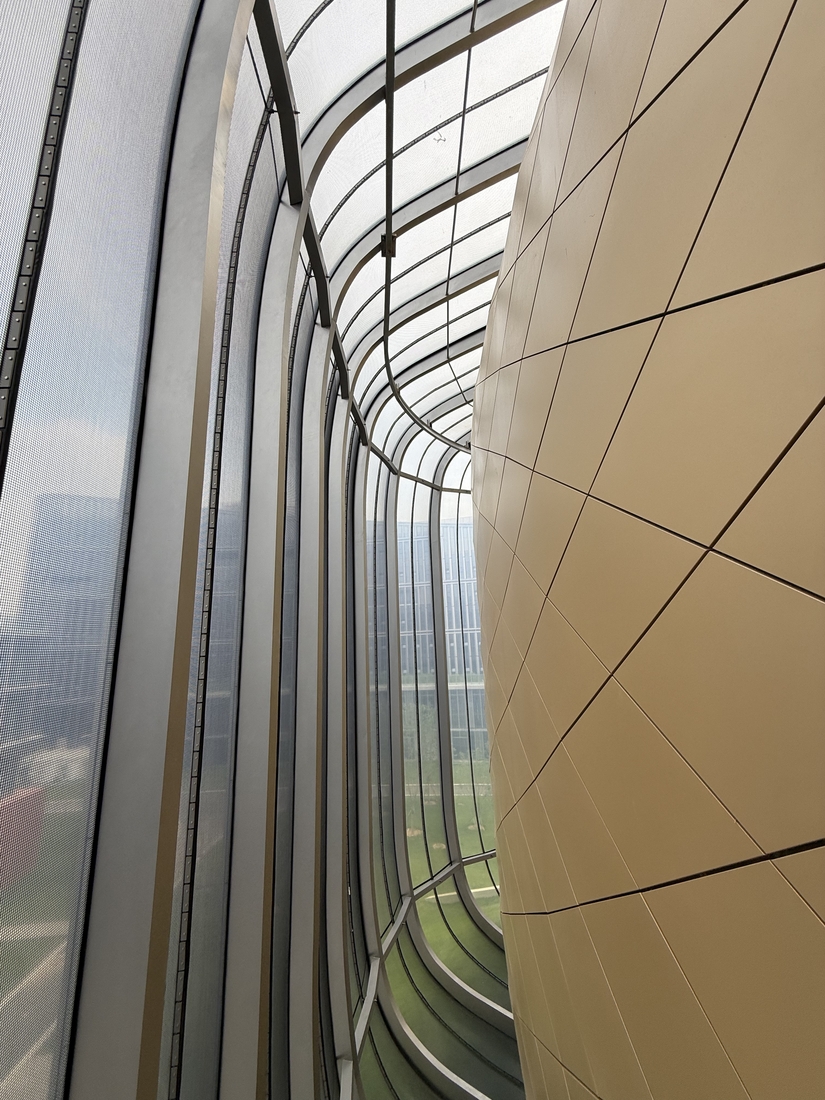
Tenseo Xtrem STFE 50 combines a high-tenacity polyarylate scrim with a transparent polymer film. This construction gives it high mechanical performance while keeping it very transparent. The scrim is visible up close, but it fades as you step back until the eye barely notices it, leaving a largely transparent envelope.
The transparency of glass at a fraction of the weight
With a light transmission rate above 50%, Tenseo Xtrem STFE 50 lets natural light through and stands up very well to the weather. Its transparency keeps a visual connection with the outside and helps create open, bright interiors, while reducing the closed-in feeling common in public buildings.
STFE 50 also stands out for a rare combination of lightness and strength. It is up to 10 times lighter than a conventional glass-and-metal system, yet it can reach a tensile strength of around eight tonnes per linear metre. This allows it to cover long spans with less need for secondary support structures. Architects therefore have more freedom to design curved surfaces and complex geometries that are harder to achieve with conventional materials.
With its transparent envelope and flowing façade lines, the Beijing Yongfeng Digital Technology Center shows how composite materials can support new forms of architecture, where light, technology and space interact with greater lightness.
Tenseo Xtrem STFE 50 through the lens of THE 7TH MATERIAL
Tenseo Xtrem STFE 50 is also a concrete example of the thinking behind THE 7TH MATERIAL. More than just an envelope, it challenges how performance is achieved in contemporary construction. Traditional systems often depend on adding more material and more structure. This membrane shows that several goals can be met at once with far less material. Its transparency brings in natural light and keeps the connection with the outdoor environment. Its mechanical strength allows it to span long distances. Its lightness helps reduce the building’s structural requirements. In other words, a single material now performs several functions that used to require separate components.
With this approach, the material is no longer just a building component. It becomes an active part of the building’s overall performance and delivers more while using fewer resources. Tenseo Xtrem STFE 50 reflects a wider shift in architecture, where a material’s value is measured as much by what it makes possible as by how much of it is used.
Project participants :
- Beijing Yinlei Fengye
- BIAD
- Serge Ferrari China