
Venice
Italy
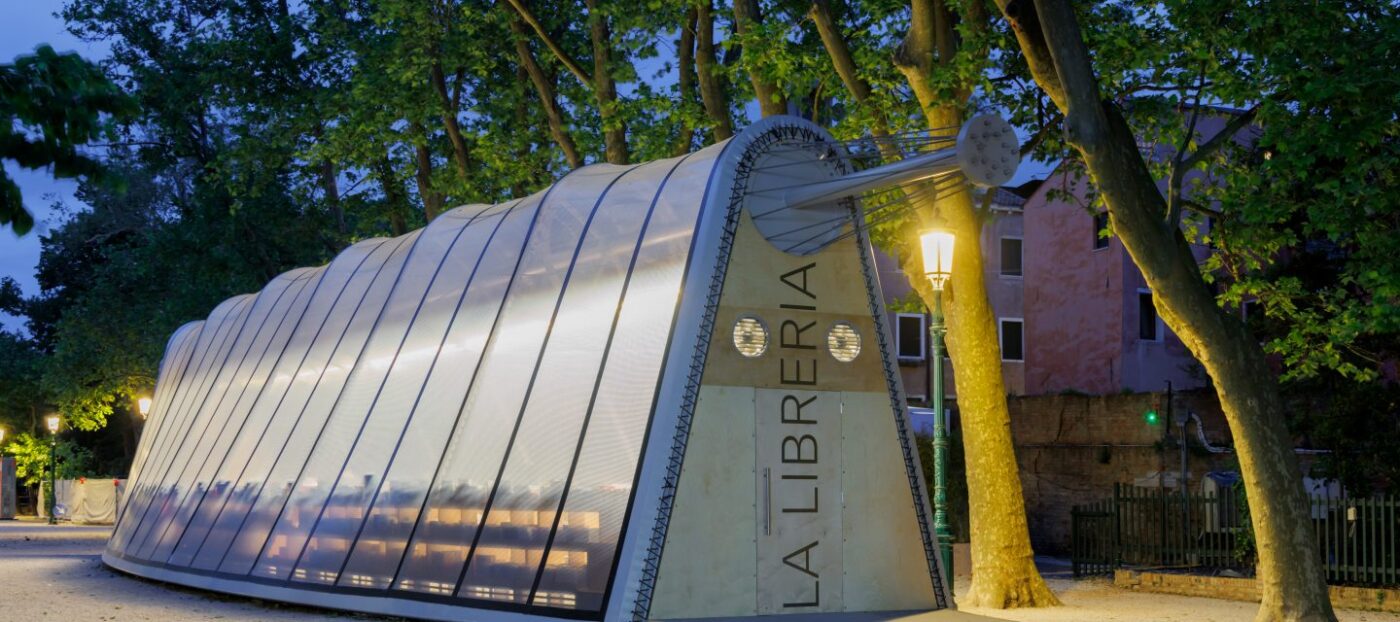
La Libreria in Venice draped in STFE
ABOUT
Serge Ferrari Group contributed to the La Libreria project, showcased at the Venice Architecture Biennale, by supplying 500 m² of STFE 50 membrane.
The Venice biennale: a landmark in architecture
Founded in the early 1980s, the Venice Architecture Biennale is an international exhibition that showcases contemporary architectural works from around the world. Held every two years in the City of the Doges, the event centers around a main exhibition located in the historic Arsenale, complemented by a multitude of national pavilions spread across the Biennale gardens in the city’s south. The 2025 edition, inaugurated on May 10, will run through November 23 and is expected to welcome over 250,000 visitors.
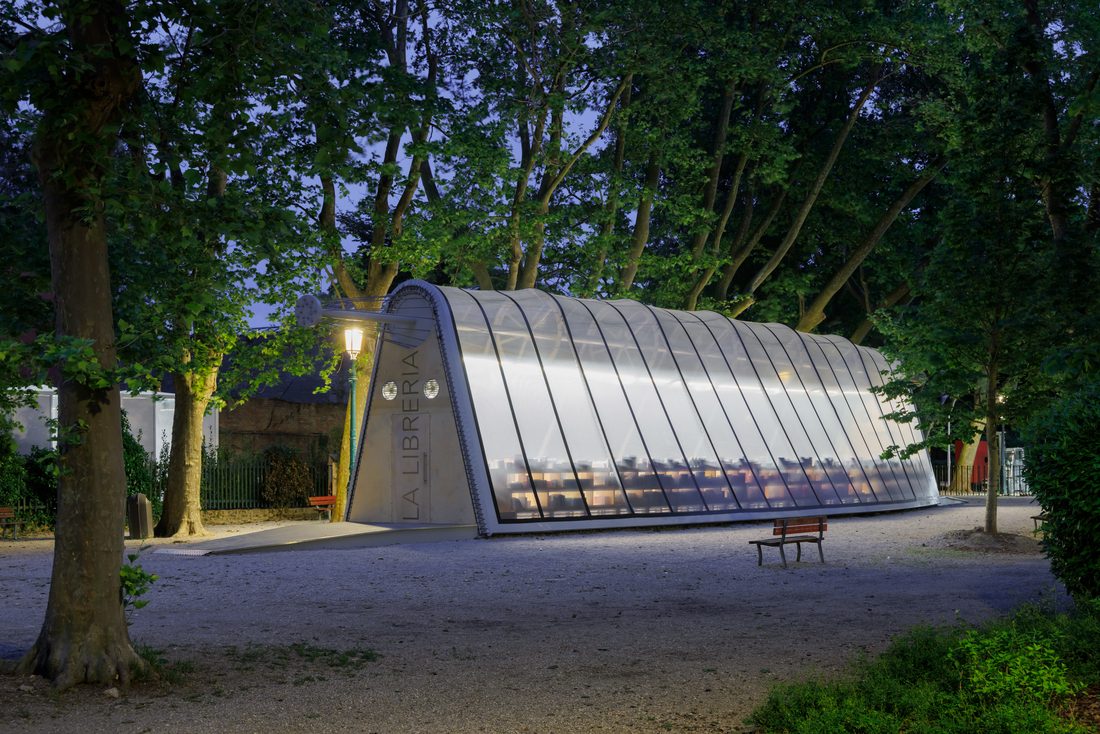
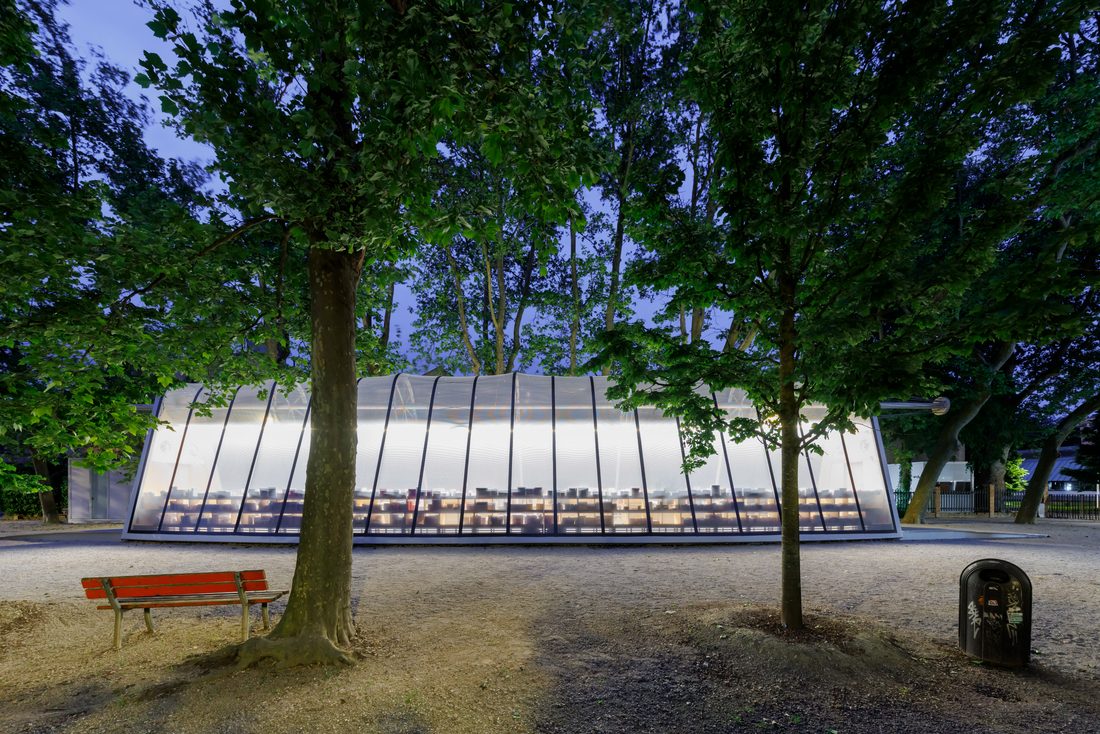
At the heart of the Biennale gardens, between the Danish and Finnish pavilions, stands La Libreria—a unique lightweight structure designed to serve as a temporary library. Fully demountable and mobile, the installation responds to the Biennale’s spirit of experimentation.
Designing a mobile library
La Libreria is a creation by the American firm DS+R Architects, aiming to promote reading and access to knowledge. Its lightweight and mobile design allows the library to be moved and brought directly to its audiences. It draws inspiration from tensile lightweight architecture, and in particular from the experimental work of French engineer Robert Le Ricolais in the mid-20th century, who explored the concept of “tensegrity.”
We considered several ideas around nomadic, tent-like structures. The main challenges were: it had to be quick to assemble and dismantle, potentially reusable, and respect a tight budget. The site itself also posed difficulties for transporting and assembling materials. We wanted people to feel like they were in a garden—even inside. The transparency allows natural light in, which is important since the structure is primarily used during the day. It also connects people to the surrounding environment. But we needed more than just transparency: we also needed shading, durability, and security. Additionally, we had to adapt to the site’s linear constraints, which influenced the overall design.
A roof made of STFE 50 to cover La Libreria
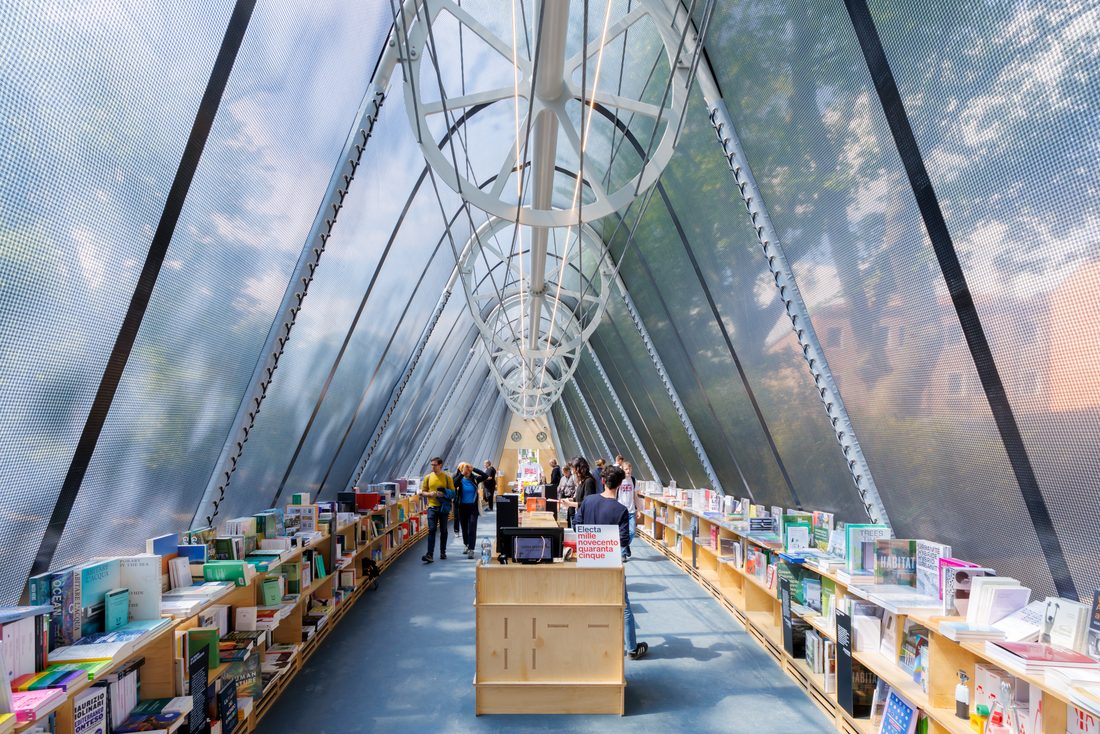
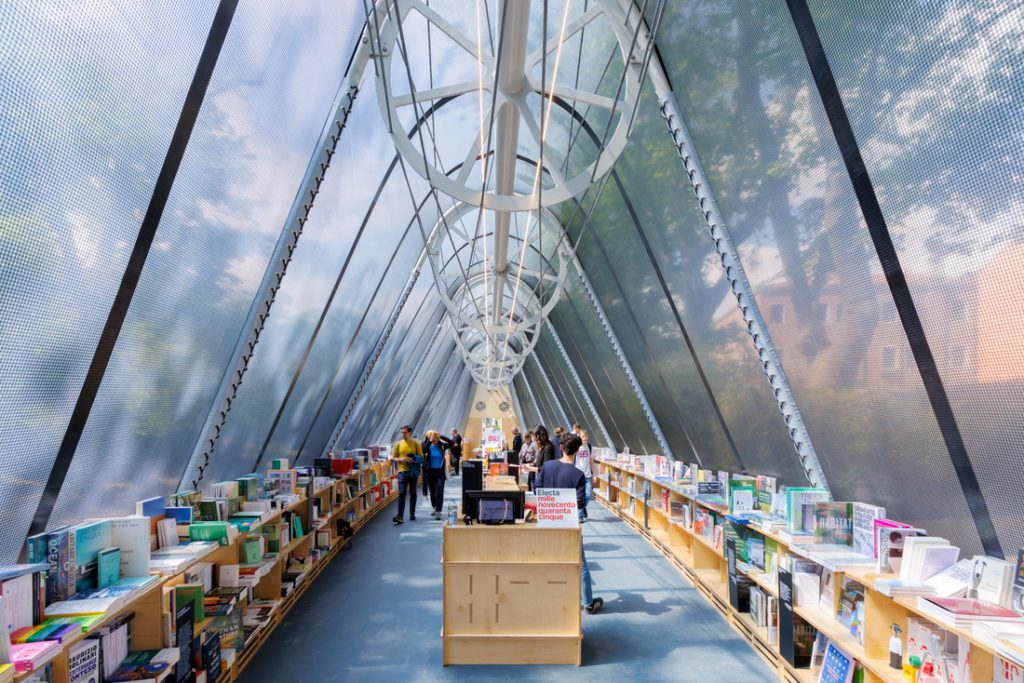
The structural framework of the installation is built around a 24-meter-long steel beam, which acts as the roof’s spine. Tensioned cables are suspended from it, forming the base for the envelope. The entire assembly is covered with Serge Ferrari Group’s advanced STFE membrane, creating a lightweight, transparent shell that allows natural daylight to enter the structure.
“We naturally began exploring the use of a transparent material for the outer shell. As we were working with a spindle-like system—a 24-meter cable-reinforced steel structure—we knew that deflection would occur and heavy materials would compromise stability. To preserve the span and overall lightness, we turned to a textile membrane. We explored several materials, but many lacked the necessary stiffness or didn’t offer adequate security. We needed something more robust to protect the books and furnishings inside. Ultimately, STFE emerged as the solution, offering greater natural light and improved interior visibility.” — Matt Ostrow, DS+R Architects
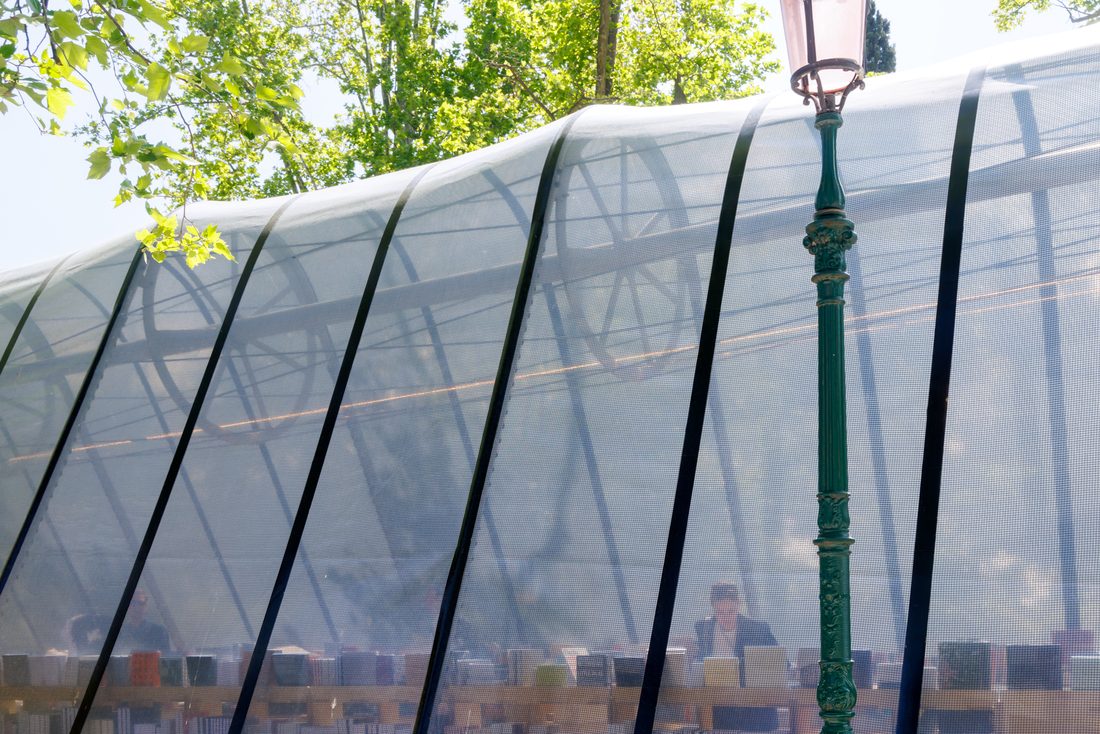
The STFE membrane plays a central role in the structural and aesthetic language of the installation. Its transparency offers excellent visibility to the outside, preventing any feeling of enclosure. This feature also allows natural daylight to flood the space, enhancing user comfort.
Moreover, STFE is extremely lightweight—ten times lighter than glass—and reinforced with polyarylate fiber, providing high structural strength. This composite material can span wide distances without the need for extensive secondary support structures. Its transparency, strength, and flexibility make it ideal for maintaining tension while allowing for great freedom in the final shape. These characteristics make it an optimal solution for meeting the technical demands of advanced architectural applications.
“This project is an experiment. It embodies themes we’ve explored in past proposals: creating social spaces centered around books and learning—not digital media. It’s like an outreach library concept—something that could pop up in a park or public space rather than a central, permanent building. For the Biennale, we also wanted to experiment with structure. The lightweight, cable-stayed system allowed us to enclose a significant area without heavy components. And of course, the Biennale encourages experimentation—so the use of advanced materials and a design intended for multiple future lives was a natural fit.” — Matt Ostrow, DS+R Architects
Structural engineering: Schlaich Bergermann Partner
Installer: Canobbio
Coyright: Iwan Baan