
Ferrara
Italy
Soltis 92: When modern architecture enhances history
ABOUT
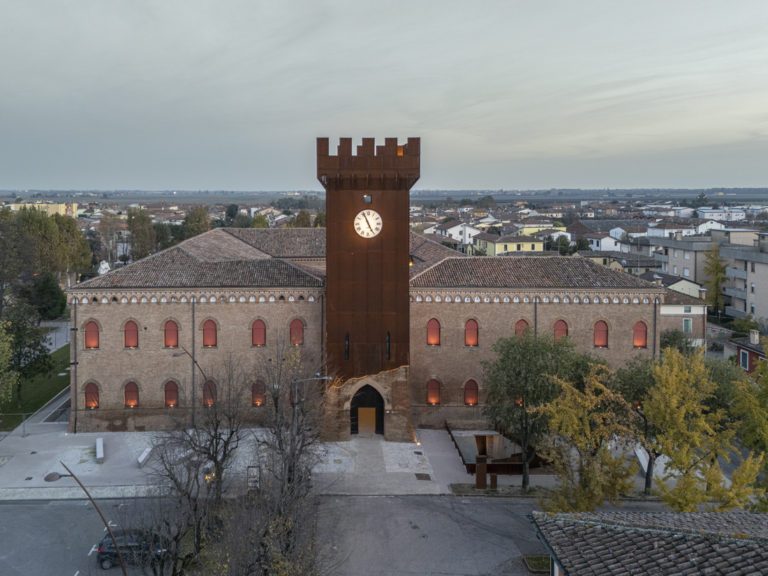
After more than a decade of closure, Castello Lambertini in Poggio Renatico (Ferrara) finally reopens its doors to the public to host events, exhibitions, meetings, and public activities. The historic building had been seriously damaged by the earthquake that struck Emilia-Romagna in May 2012, causing the collapse of the clock tower—an identity symbol for the community—and significantly compromising the entire structure.
The Reconstruction Project: A Restoration Between Memory and Innovation
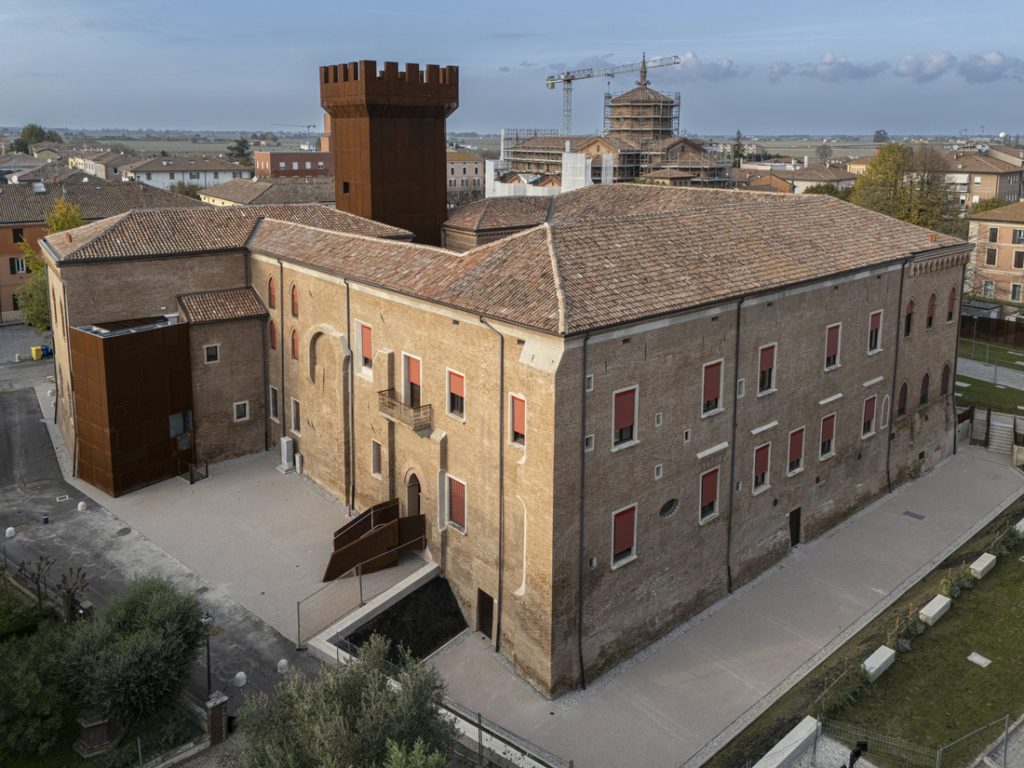
The reconstruction involved both the consolidation of the existing historic structures and the creation of new parts with contemporary materials, designed to combine respect for historical memory with a modern and functional approach, in compliance with architectural and landscape constraints. The works were entrusted to companies specialized in the restoration of historic buildings and carried out through collaboration between the municipal administration, designers, technicians, suppliers, and the Superintendency.
One of the key interventions is the reconstruction of the clock tower in corten steel: a contemporary architectural choice that harmoniously dialogues with the castle’s ancient structure. The new tower includes a panoramic walkway, designed to offer views over the town and surrounding landscape. The interior has been prepared to house a multimedia installation that tells the story of the place, the damage it sustained, and the reconstruction journey.
The original masonry has been consolidated, integrated with anti-seismic elements and equipped with new technological systems, while the interiors have been redesigned to host cultural, educational, exhibition, and civic activities. Special attention was given to environmental sustainability, with the use of energy-efficient solutions and durable, low-impact, low-maintenance materials.
SOLAR SHADING SYSTEMS
Among the finishing works, the installation of external solar shading systems was of particular importance. These were designed to ensure natural light and heat control without compromising the visual impact of the building.
To meet these needs, over 130 custom-made roller blinds were designed and installed, all featuring Soltis 92 fabric by Serge Ferrari in brick red, combined with boxes painted in the same shade as the fabric. These systems were developed and installed in full respect of the original chromatic and architectural features to maintain visual continuity with the historic character of the building.
SOLTIS 92 by SERGE FERRARI Technology and Durability
The choice of Soltis 92 over traditional fabrics was determined by its exceptional mechanical strength. Made from high-tenacity polyester, Soltis 92 can withstand harsh weather conditions and strong winds, ensuring long-lasting performance.
Serge Ferrari’s patented Précontraint® technology, which keeps the fabric under bi-axial tension during production, ensures dimensional stability during use.
Design and Practicality
The wide color range of Soltis 92 allowed the designers to find the perfect balance between performance and design: the brick red color respects the original tones and harmonizes with the castle’s façade.
The coated finish that characterizes the smooth surface of Soltis 92 makes the fabric easy to clean and improves color resistance to UV rays: the color remains vivid even after years of exposure (according to ISO 105 A02 standard).
Designed by Serge Ferrari for outdoor applications, this high-performance fabric significantly reduces maintenance requirements.
Ideal for Public or Public-Use Spaces
Soltis 92 is Euroclass B-s2,d0 fire-rated, compliant with the European REACH regulation, and Greenguard Gold certified. Its low environmental impact is described in the EPD (Environmental Product Declaration) available on request by contacting Serge Ferrari.
Project Participants :
Architect: Gian Paolo Rubin
Solar shading installation: Resstende
Shading fabric: Soltis 92 by Serge Ferrari
Copyright: Andrea Liverani