
Los Angeles – California
United States
Historic Los Angeles College Receives Transformative Courtyard Upgrade
ABOUT
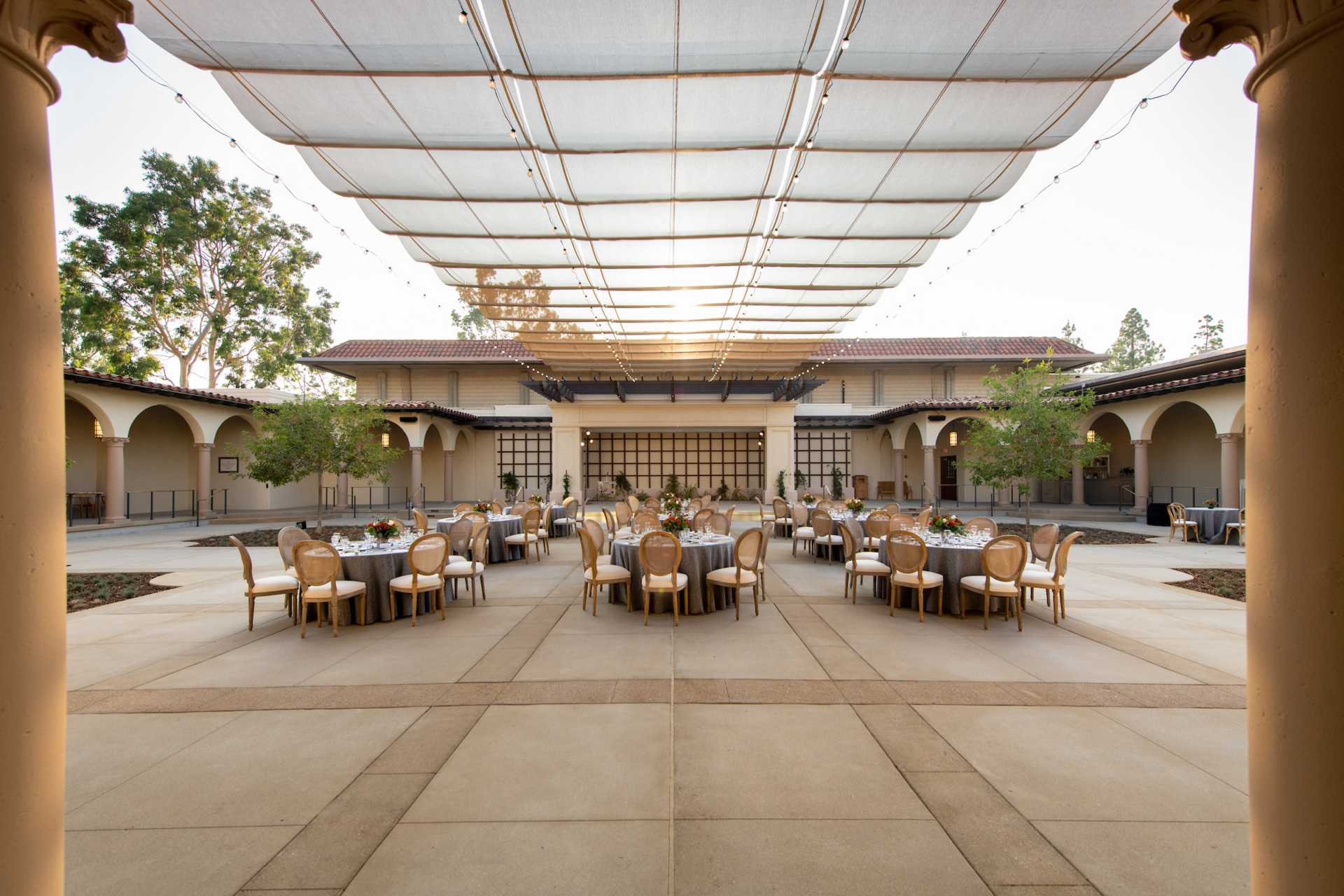
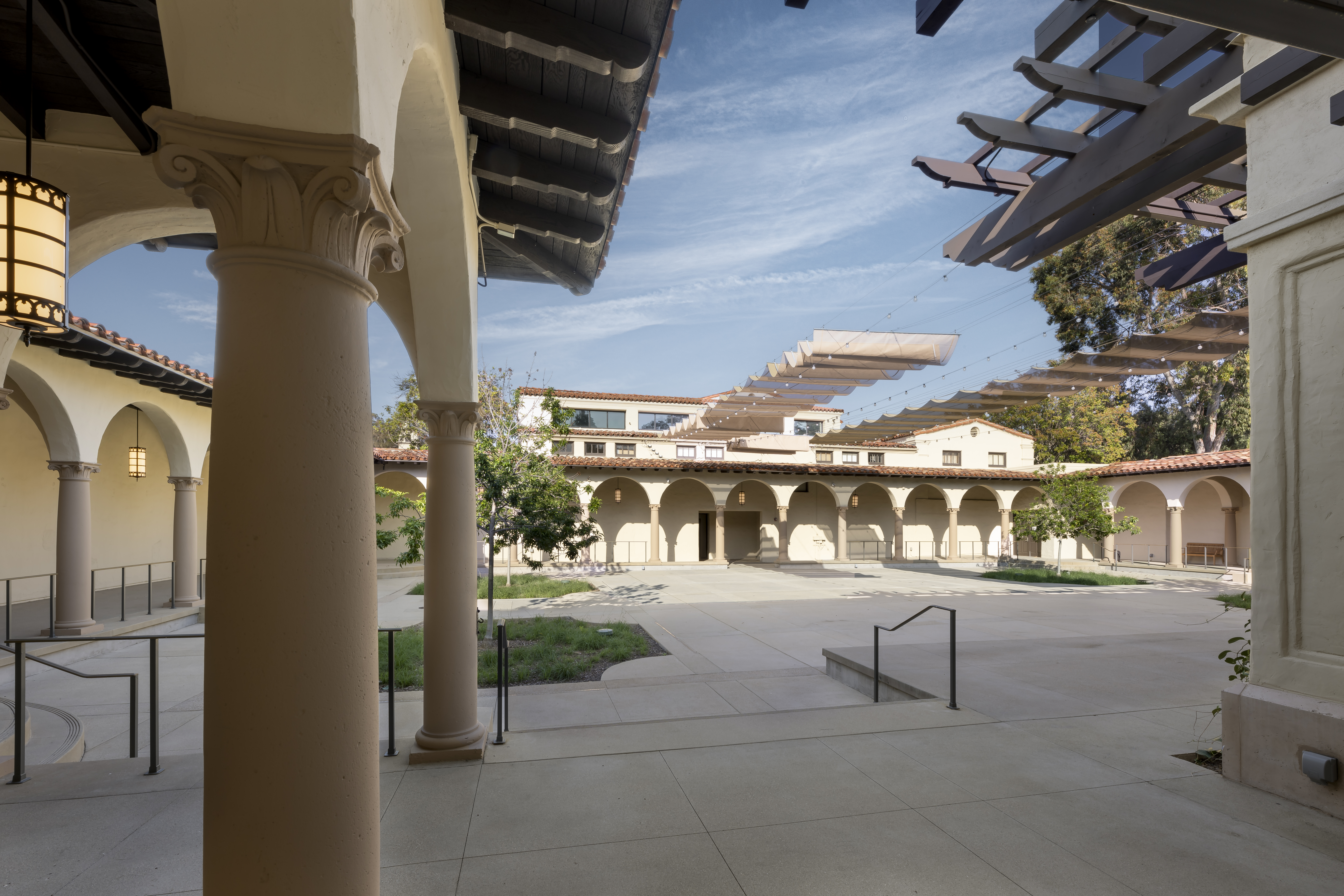
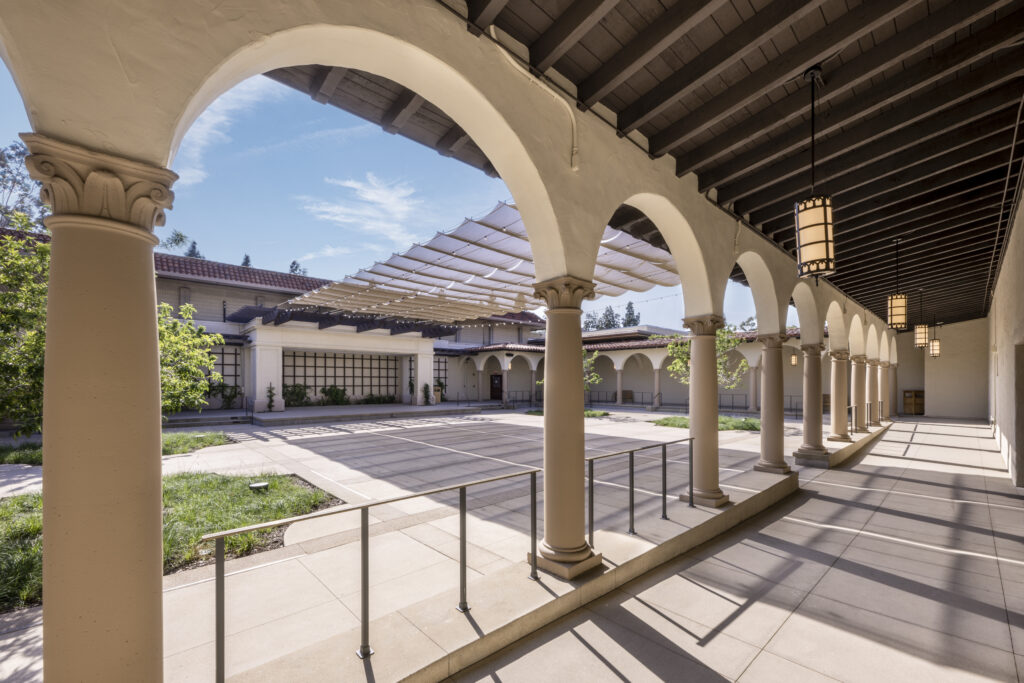
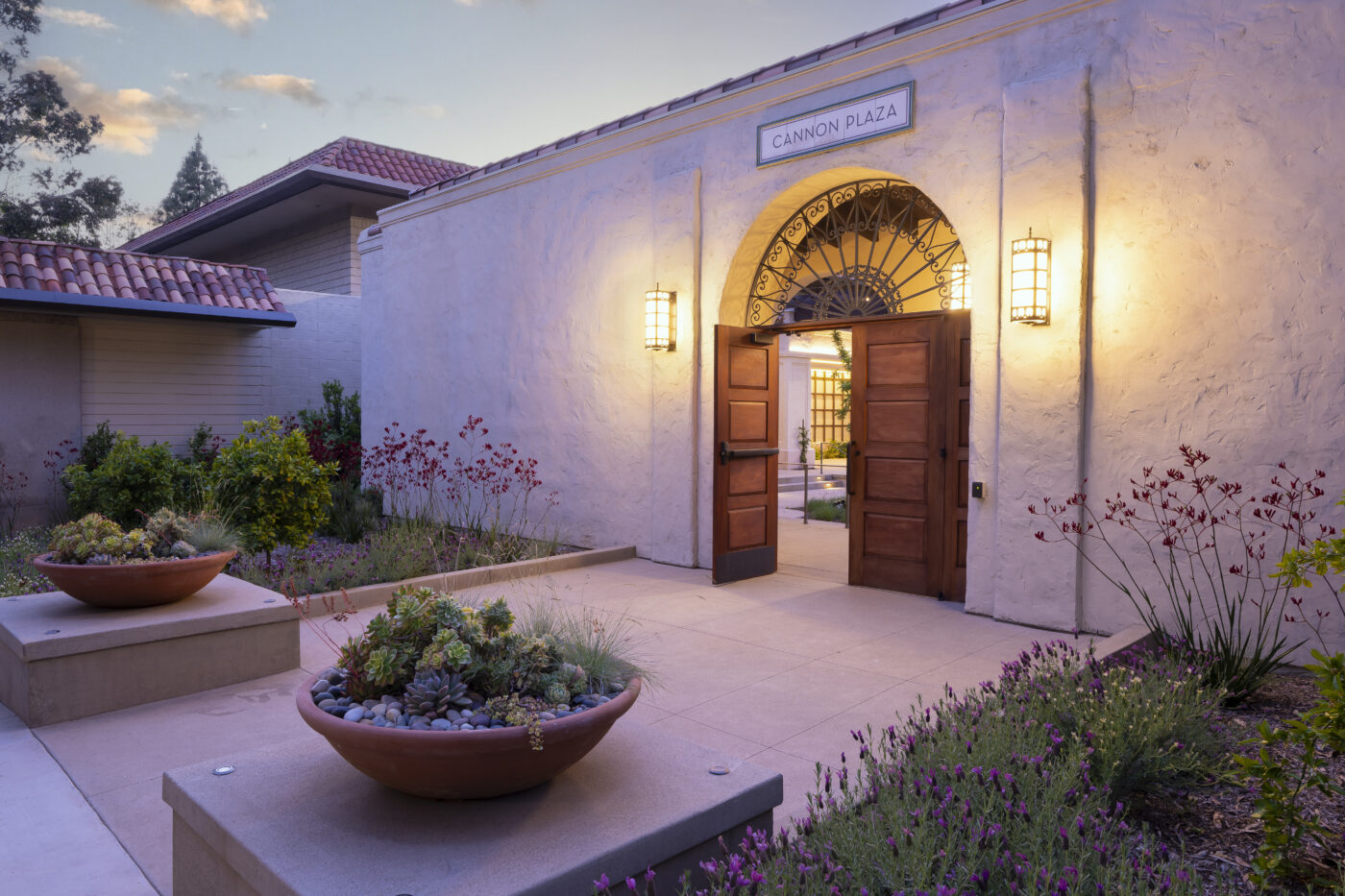
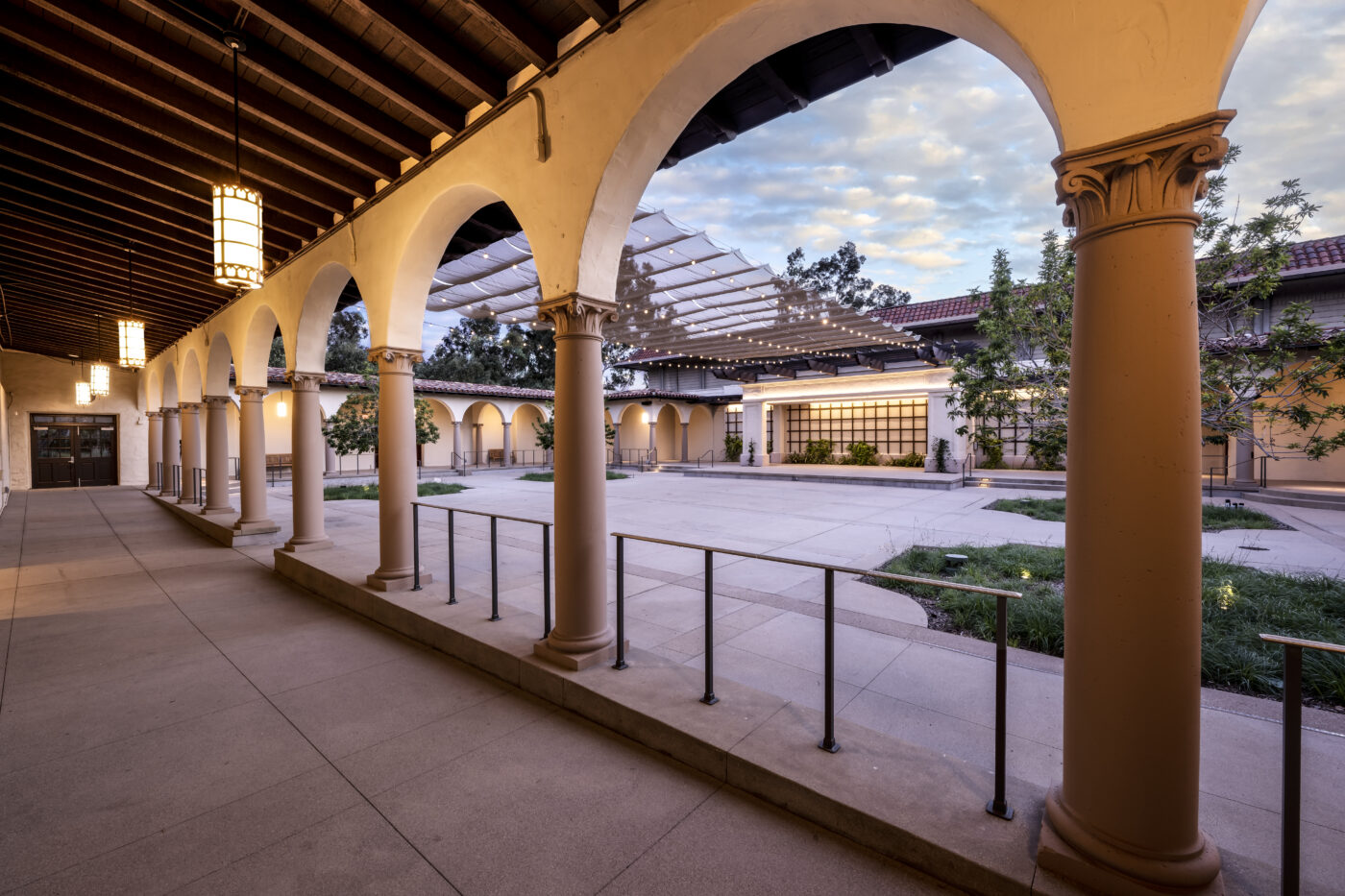
Occidental College in Los Angeles, California, was founded in 1887 and is one of the oldest liberal arts colleges on the West Coast of the U.S. In keeping with the college’s practice of renovating and repurposing its historic buildings, the latest venture was to upgrade the Cannon Plaza, preserving the colonnaded E.S. Field Building designed by Myron Hunt, and converting what was once Taylor Pool into a courtyard and garden.
Unveiling the Vision
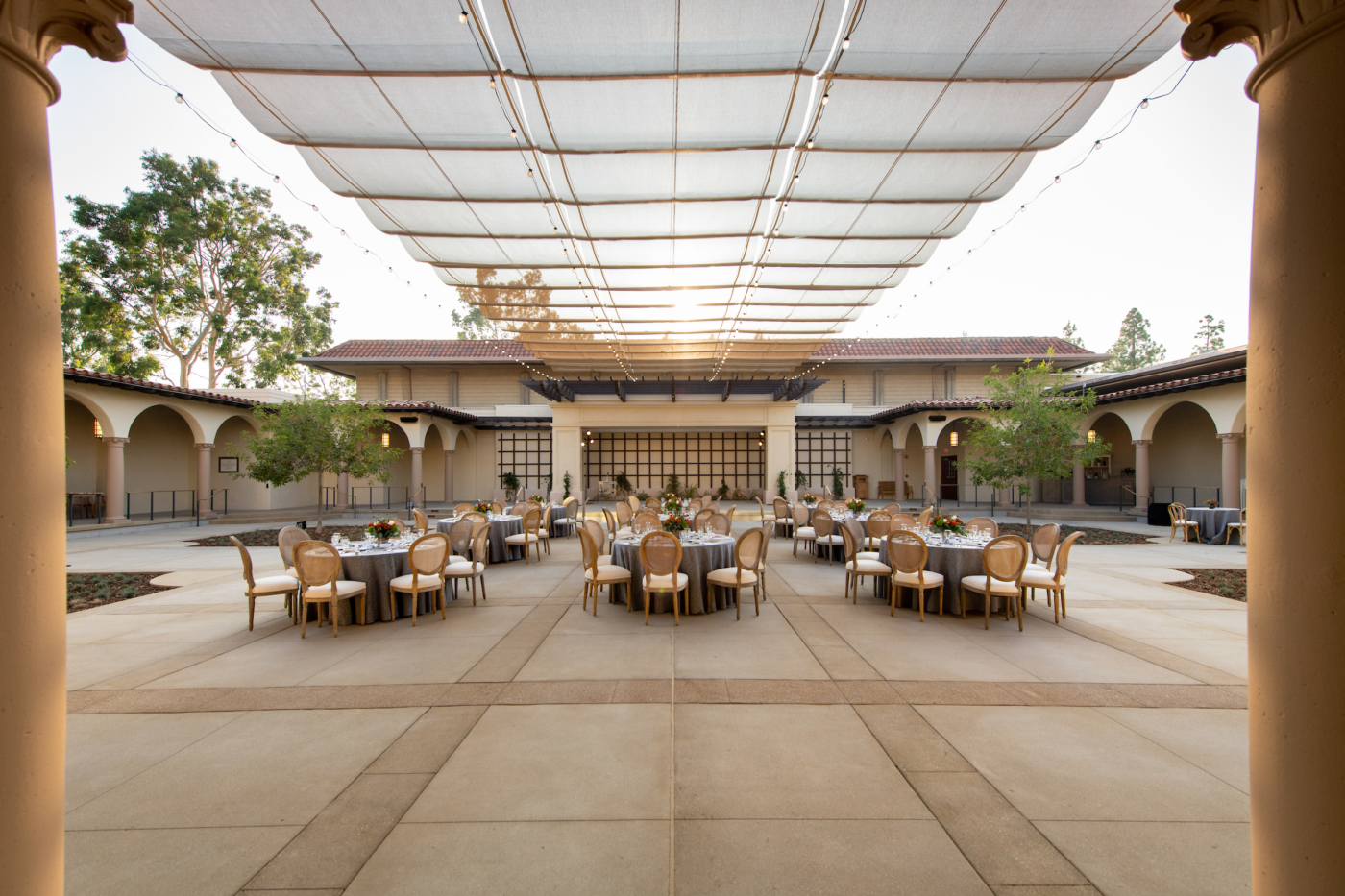
As the restoration project took shape with leadership from Occidental College Facilities Management, Architectural Resources Group (ARG) designed the rehabilitation project, with Tovey/Shultz Construction Inc. as the general contractor, and Watchdog serving as the construction manager. The team set out to create a simple yet refined space that would evoke the ambiance of a secret and intimate garden while accommodating a multitude of events, both day and night.
From its inception, the project aspired to weave an immersive experience for all who set foot on the plaza. Collaborating closely with the college president and the facilities team, ARG envisioned a design that transcended the ordinary. The plaza’s sprawling expanse of 5,900 square feet and the adjacent covered pavilion of 965 square feet presented a blank canvas for creativity.
The landscape architect curated a fragrant, contemplative plant palette that lends the plaza a calm, garden-like feel. Complementing the greenery, the lighting designer selected period-appropriate pendants along with festoon and string lights to give the space a warm glow as evening arrives. The design also includes a retractable shade structure for sunny days, teak patio furniture, and a built-in speaker system, with the goal of accommodating up to 250 guests.
Overcoming the Challenges
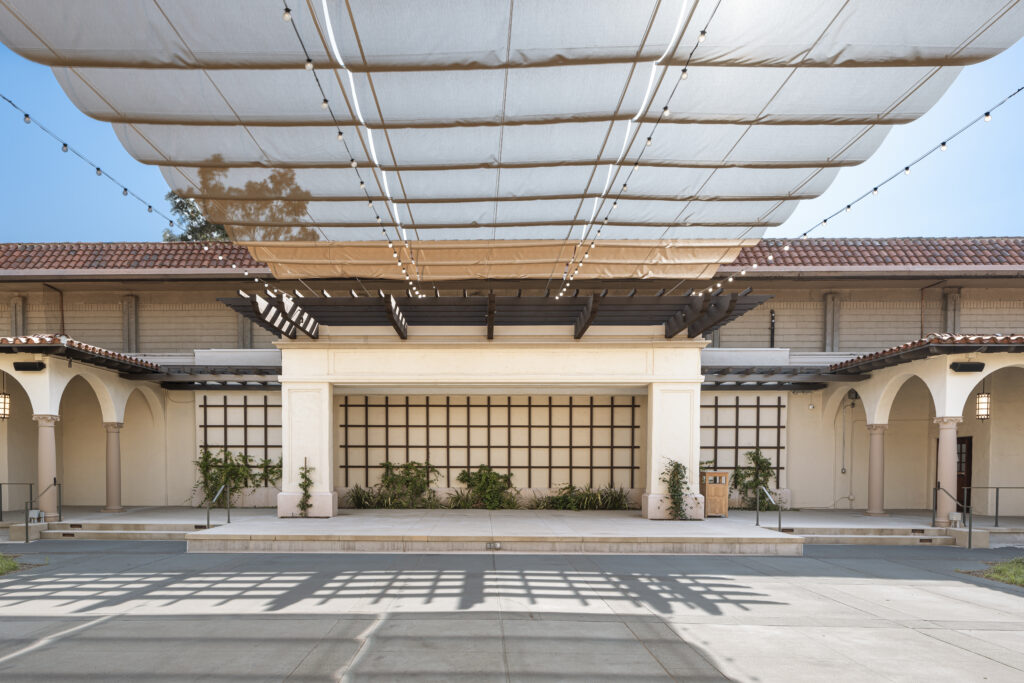
As with any ambitious project, the team encountered its share of challenges. A signature feature of the pavilion—a concealed, motorized 100-foot projection screen—presented a unique obstacle. The team needed a solution that would provide shade and protect against the elements without obstructing sightlines to the screen.
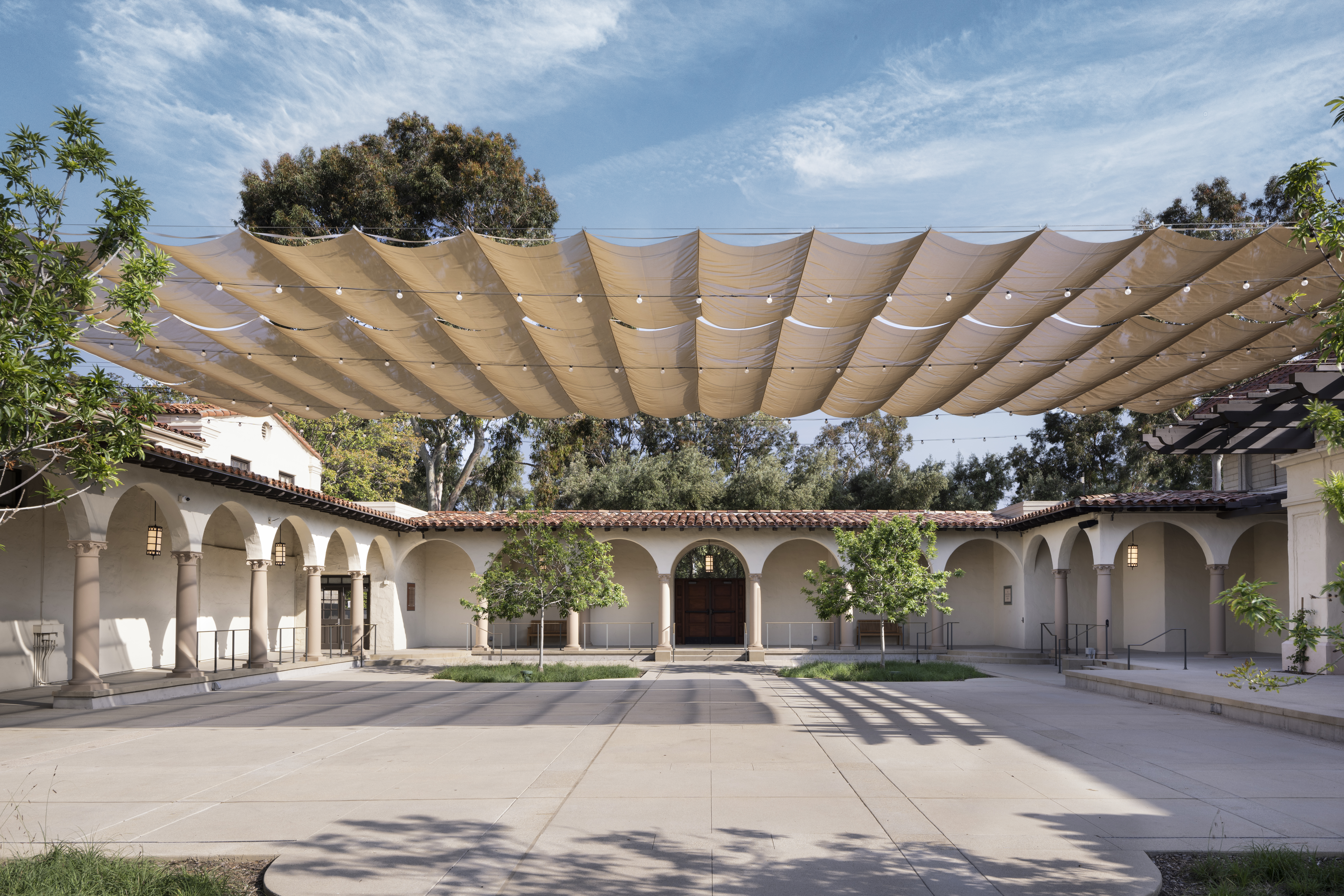
A full-length retractable canopy spanning the courtyard from building to building became essential. Infinity Canopy recommended Serge Ferrari Group’s Soltis 86 fabric for its durability and performance. The material was put to the test, required to unfurl smoothly across a 65-foot span while still allowing the canopy drapes to be drawn to the opposite side of the pavilion.
The final solution combined engineering finesse with construction-management expertise. The canopy was divided into three equal sections, each nearly 10 feet wide, enabling easy manual operation. Each section was secured with four anchors—two anchored to the adjacent building and two anchored to the pavilion’s steel posts and crossbeam. Infinity Canopy’s design incorporated three independent pulley systems to open and close the sections efficiently. Festoon lighting, strung through the space between the sails, added warmth and atmosphere under the night sky.
The Choice of Serge Ferrari
The selection of Serge Ferrari Group’s Soltis 86 fabric for the canopies stemmed from Infinity Canopy’s endorsement of its superior quality and unparalleled durability, making it well suited to the site conditions and canopy size. With an array of colors and light transmission options available, the fabric proved to be an excellent canvas. The color “Pepper” was selected to seamlessly complement the California Mission style of the space with its warm, and neutral tones.
Soltis 86 is ideal for a variety of interior and exterior solar protection applications. In outdoor settings, the fabric can block up to 93% of heat while allowing up to 28% natural light transmission. It is easy to clean, UV resistant, and offers exceptional dimensional stability thanks to Serge Ferrari Group’s Précontraint® technology. This proprietary technology gives the materials outstanding performance, enabling them to exceed market standards in dimensional stability, mechanical strength, coating thickness, and flatness. Soltis 86 is GreenGuard Gold certified and recyclable.
A Vision Brought to Life
As the project neared completion, Occidental College’s Cannon Plaza emerged as a compelling expression of vision, persistence, and craft. Blending architectural character with a strong connection to landscape, the plaza has become an inviting destination for gatherings.
Across design and construction, the team navigated challenges and delivered a space that exceeded expectations. Today, Cannon Plaza stands as a notable adaptive reuse and renovation project—preserving a sense of history while reimagining the site for years to come.
List of Contributors
- Architect: Architectural Resources Group
- General Contractor: Tovey/Shultz Construction Inc.
- Construction Manager: Watchdog
- Fabricator: Infinity Canopy
- Engineer of Record: Risha Engineering
- Canopy Engineer: Sullaway Engineering
- Installer: Superior Awning
- Copyright: Marc Campos / Ed Carreón