
Tenero
Switzerland
Sports center with high-tech tents for enhanced thermal comfort
ABOUT
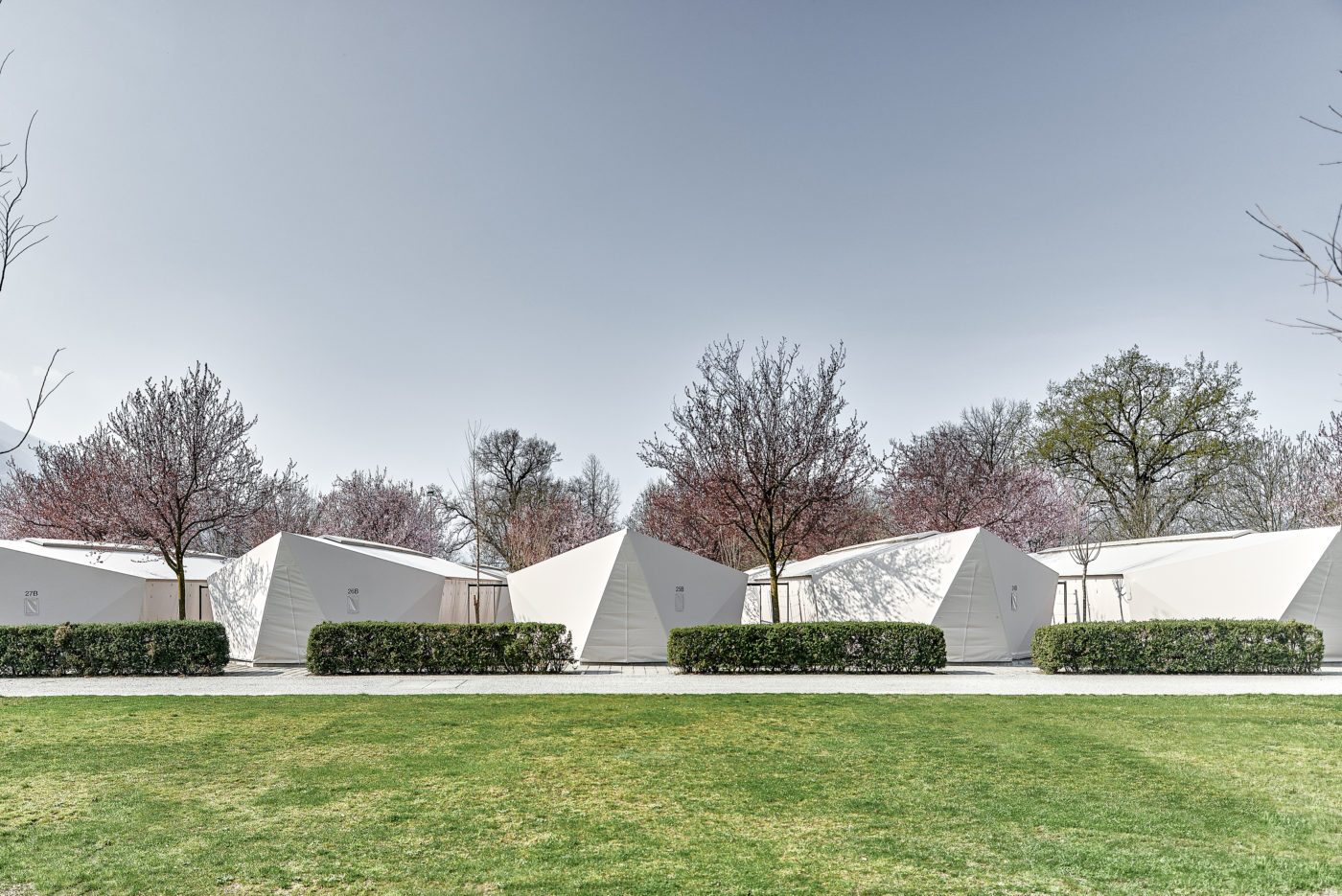
The Tenero national youth sports Center (CST) is a facility managed by the Swiss federal office of sport, located in a picturesque setting on the shores of Lake Maggiore.
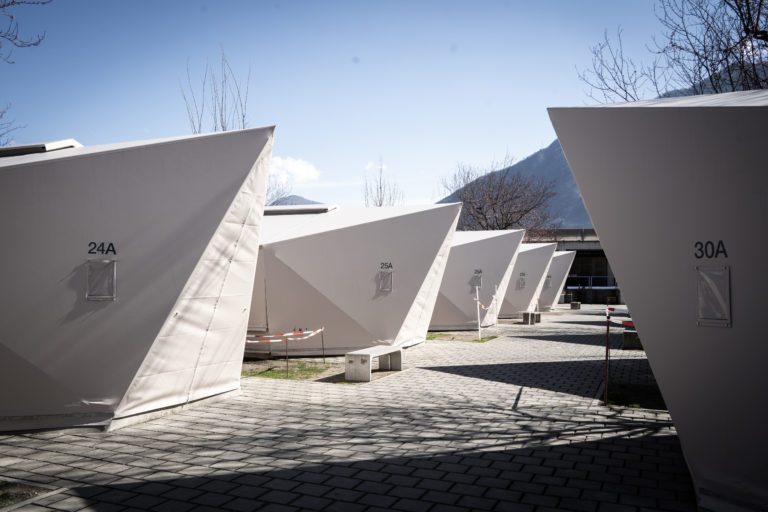
It features 160 different sports facilities and an extensive infrastructure for organizing sports camps and training courses, ranging from amateur to high-level sports. The accommodation area also includes a campsite with 700 beds spread across 35 universal tents, highly valued for fostering team spirit.
The Tent Concept
As part of the fourth renovation phase of the CST, completed in spring 2023, the campsite—originally designed a decade ago by architect Mario Botta, comprising 35 tents and 700 beds—needed to be upgraded, as the existing infrastructure no longer met current comfort and snow load resistance requirements. The new tents were installed on the existing foundations, with only a few additional foundations added, while taking the following requirements into account:
- Improvement of ventilation, thermal comfort, and energy efficiency
- Sufficient snow load resistance to avoid dismantling during the winter season
- Expanded storage space and accommodation capacity
- Increased comfort with additional seating areas
The tent concept was developed by Studio Baserga Mozzetti Architetti from Muralto, in collaboration with Patocchi Sagl Engineering from Cevio. The project also benefited from the support of landscape architect Giorgio Aeberli, who gradually replaced and diversified tree species to enhance the tents’ shading while contributing to greater biodiversity on the sports campus.
A Comprehensive Solution
This tent project clearly falls within the realm of tensile architecture, as it involved not only developing a tent covering but creating a comprehensive construction solution with high aesthetic standards, collaboratively designed by both the architect and the structural engineer. Beyond optimizing the functional use of space and comfort, the design needed to provide end users with a modern atmosphere while respecting key aspects of camping, such as connection with nature, spaciousness, spontaneity, and community experience.
The implementation of membrane constructions—an individually designed metal structure covered with a membrane—offers numerous advantages. On the one hand, it minimizes the use of materials and resources, resulting in an extremely lightweight construction with a low environmental impact. Furthermore, this solution is distinguished by its increased resilience to weather conditions year-round (snow, rain, wind) and its high durability, all at reduced costs. Before executing the full series, the specialist company in membrane construction and modular structures, Bieri Tenta AG, brought its extensive expertise to the tent construction and first produced a prototype to verify the functionality, performance, and efficiency of the design, comparing them to the previous military tents.
An Efficient Thermal Concept
The primary challenge in designing the tents was effectively reducing heat gain during the summer and preventing the tents from overheating. To tackle this issue, the expertise of the energy efficiency engineering company IFEC Ingegneria SA was sought, and three key measures were implemented:
- Creation of a natural roof ventilation system
- Design of a double-skin roof structure with Low-E coated tent fabrics
- Installation of roll-up side walls with a full opening option
The double-skin roof of the tents consists of a primary outer membrane and an inner membrane, which folds down on the sides to form the vertical side walls of the tents. The gap formed between the two membranes is ventilated by insect screens installed at the lower edges of the sloped roof and a divided ridge equipped with ventilation grilles. When direct sunlight hits the outer roof membrane, the air in the gap heats up and escapes by convection, significantly contributing to cooling the tent.
Another crucial aspect is the use of the Flexlight 1015 material by Serge Ferrari Group. This high-tech membrane, designed for modular structures, features a special surface treatment that significantly reduces the effects of heat radiation by reflecting much of the absorbed heat. This results in a substantial reduction in heat gain inside the tent and a noticeable drop in interior temperature compared to conventional tents. The Low-E coatings are applied to the faces of the fabric that face the roof gap.
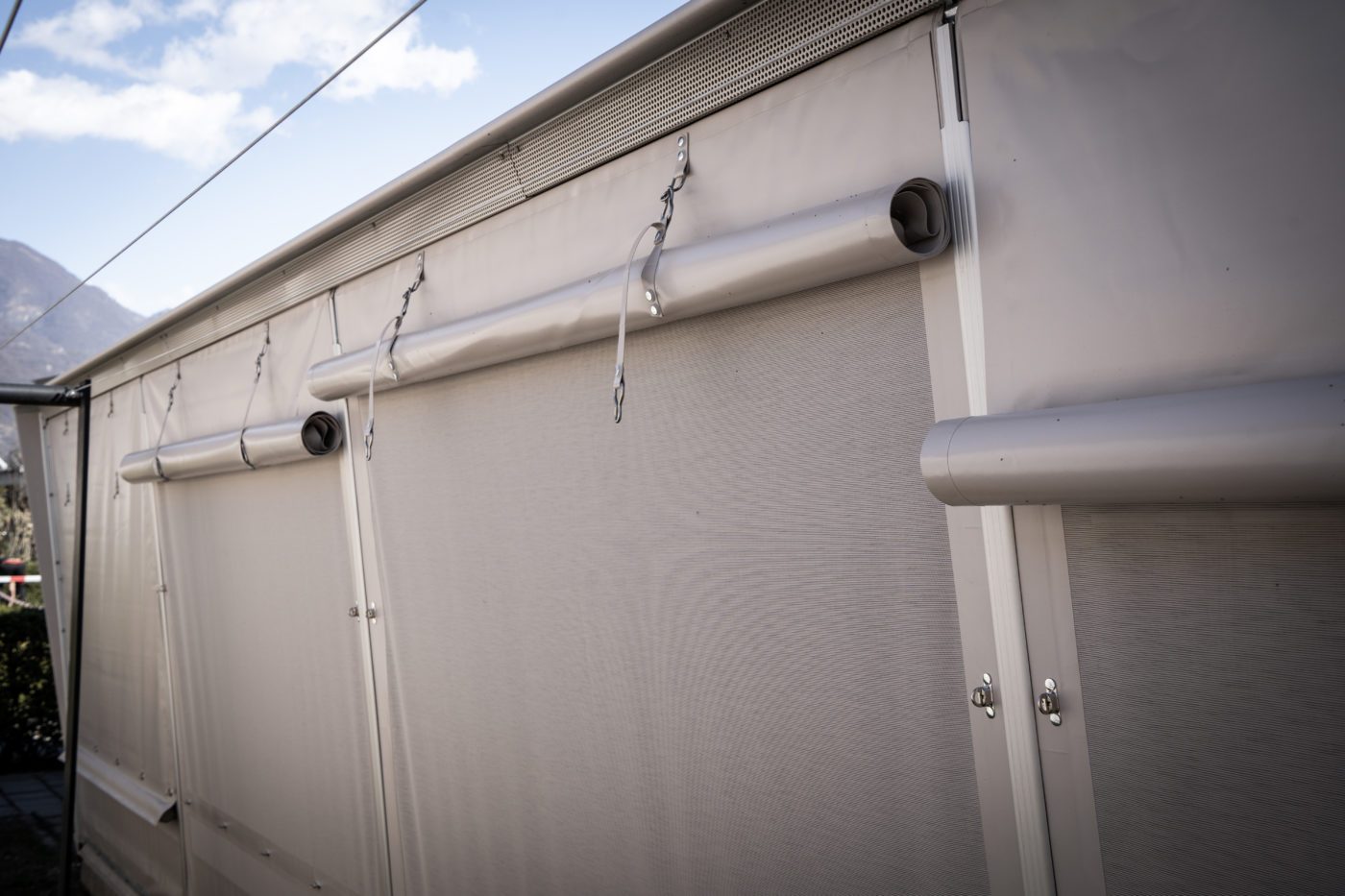
The lateral elements of the longitudinal façades were equipped with roll-up fabrics, allowing for wide openings and natural ventilation of the interior tent spaces. To demonstrate the prototype’s effectiveness, a two-month long-term test was conducted, with an average daytime temperature of 22°C.
Measurements taken from the prototype showed that, on days of intense sunlight, the maximum interior temperature at the ridge was 20°C lower, and 15°C lower at ground level, compared to the old military tents. Another positive effect was the significant reduction in condensation formation inside the tents during spring and autumn months. In fact, the critical period in the new tents is almost 90% shorter than in the old military tents.
High-Performance Tents
For this tent project, Serge Ferrari Group’s high-tech Flexlight 1015 membrane with Low-E coating was used. This membrane is made from high-strength polyester fabric coated in PVC, with a sand-colored finish. It also features a Low-E coating and a PVDF varnish, which reduces dirt accumulation. The nanotechnology used ensures that the fabric is nearly self-cleaning through rain and sunlight, maintaining a high-quality and durable appearance. In terms of fire safety, the membrane stands out with its Euroclass B-s2,d0 classification according to EN 13501-1. This means that while the fabric may catch fire initially, it allows smoke to escape through the opening, but the flame self-extinguishes after some time due to its fire-retardant properties. The “S2” code indicates moderate smoke development, and “d0” signifies no dripping of molten plastic.
Regarding durability, the membrane is treated to prevent mold formation and features a “Basic Wicking” treatment that reduces capillary water absorption at the fabric’s edges in high humidity. The membrane is secured to the supporting structure using welded cords inserted into the structure’s profiles. To achieve aesthetically pleasing, homogeneous surfaces, tension is applied via tensioners located under the roof ridge for the outer roof strips and at the base of the structure for the façade panels.
The five façade panels not only provide natural ventilation through roll-up “shutters” but also allow abundant natural light, ensuring a pleasant atmosphere throughout the day. The entire opening surface is protected by insect screens.
Supporting Structure
The supporting structure is made of lightweight metal profiles, connected by cross beams along the roof slopes. The tent ends and entrances are framed by cantilevered triangular steel tube porticoes, which, combined with diagonal steel profiles and cross beams, form a trapezoidal end. This not only gives the tent a unique architectural shape but also stabilizes and stiffens the supporting structure. The crossbeam posts also serve as supports for ten integrated benches, installed along the sides of the tent, providing an integrated seating solution.
Project Participants
Commission: Swiss Confederation, Federal Office for Buildings and Logistics, FBL
Architectural Project: baserga mozzetti architetti sa, CH-Muralto
Structural Design: Patocchi Sagl Engineering, CH-Cevio
Engineering, detailed planning, and execution: Bieri Tenta AG, CH-Grosswangen
Fabric: Flexlight 1015 with Low-E
Pictures: Bieri Tenta AG/marcelo villada ortiz fotografo