
Xiatian
China
A checkerboard project floating between mountains and rivers
about
The Chinese city of Dehua, renowned for its white porcelain production, is now pursuing a new ambition.
To reinvent its public spaces and strenghten its urban vitality trought architecture. At the heart of this dynamic lies the Xiatian Cultural and Sports Park, a flagship project blending sport, culture, and architectural innovation.
A major new project for Dehua
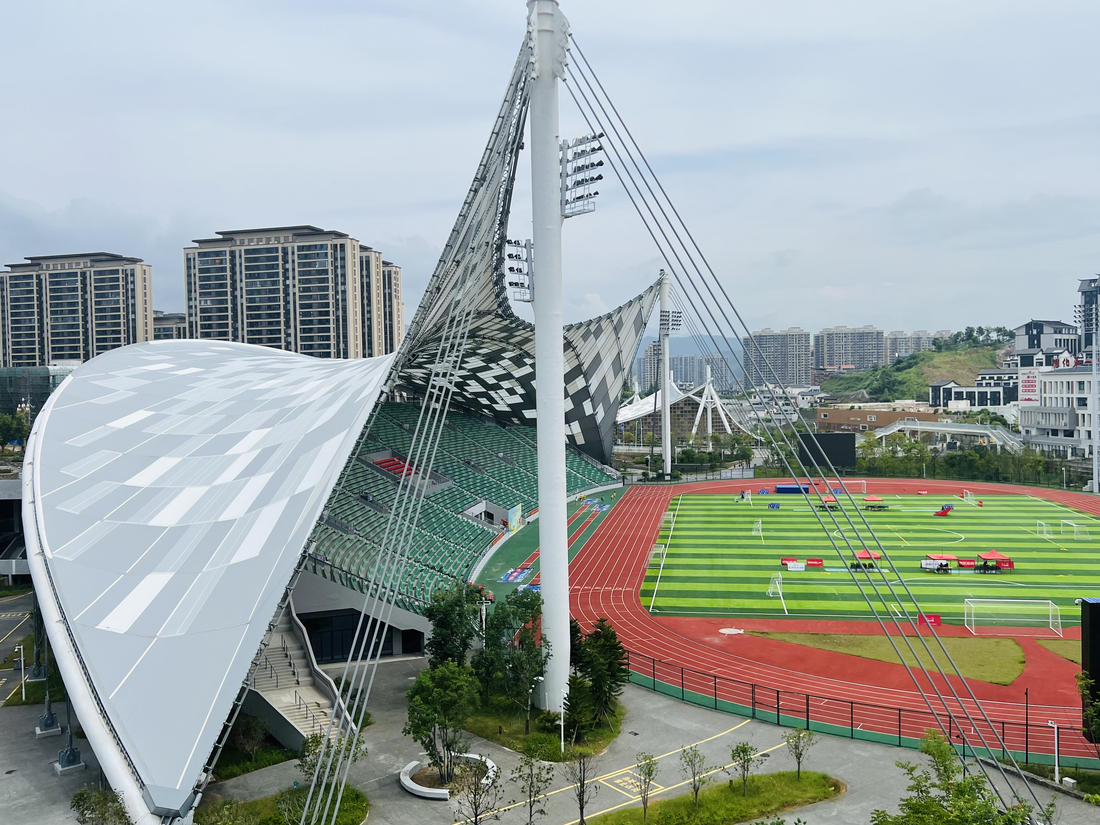
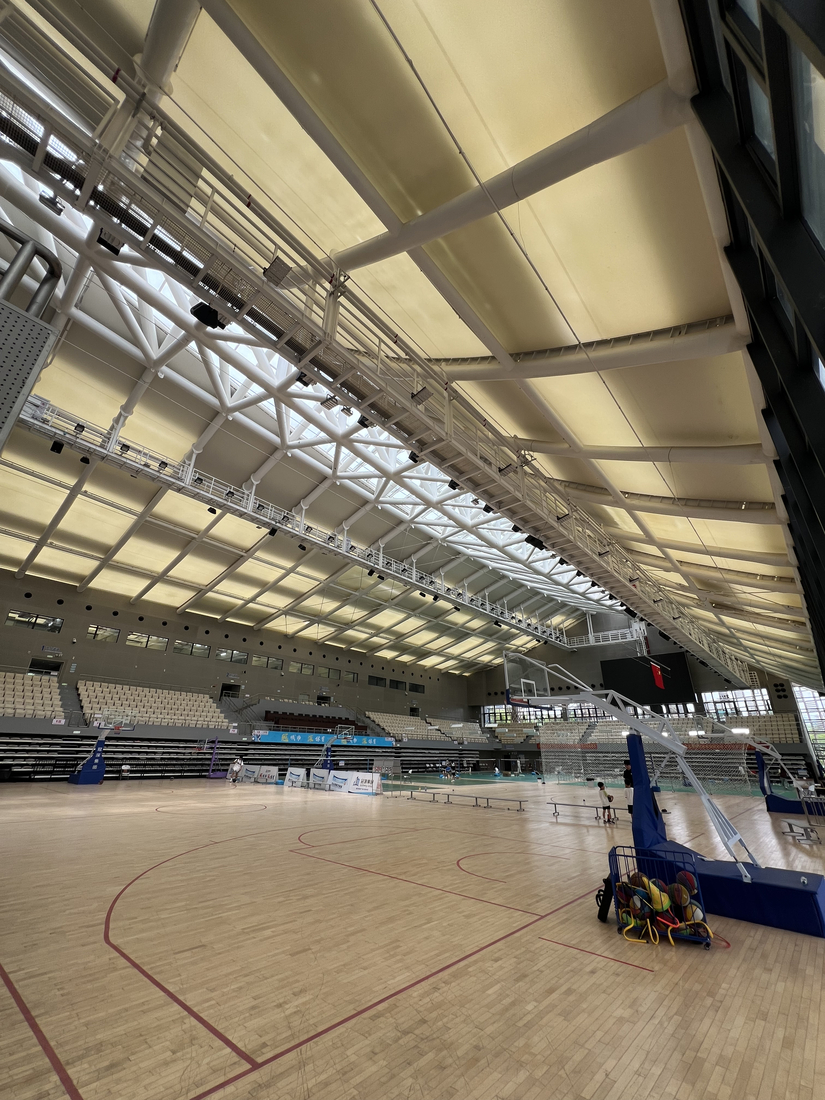
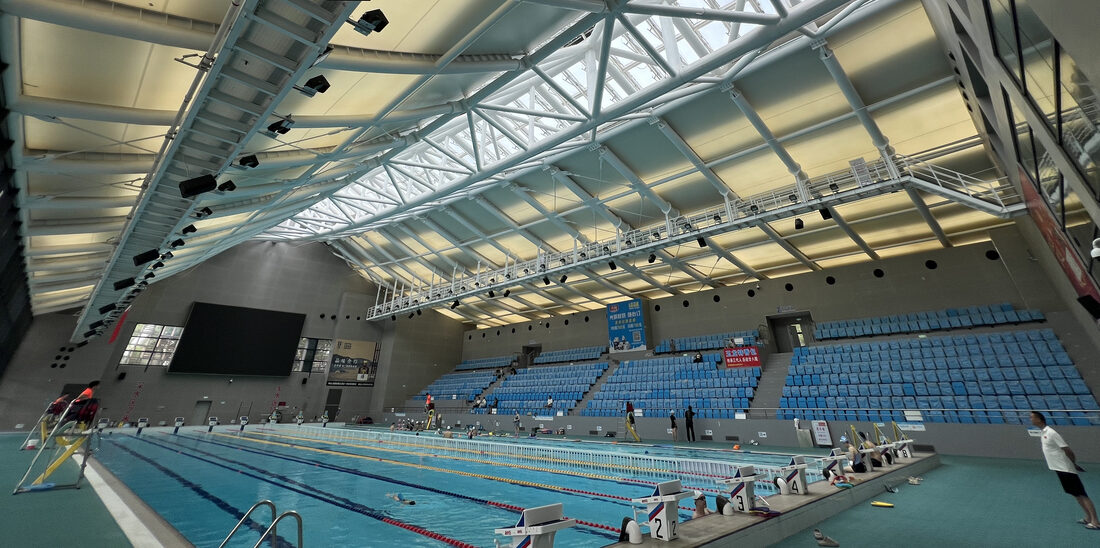
This modern complex is one of the largest infrastructure projects undertaken by Dehua in recent years. Its spatial organization is centered around a stadium and two halls (a gymnasium and a swimming pool), all aligned along a central landscaped axis. The three buildings operate independently but are tied together by a coherent landscape design. The stadium has a seating capacity of 11,000, the gymnasium 2,600, and the swimming pool 800—making it suitable for both medium-sized competitions and sports activities open to the public.
A design made to blend into the landscape…
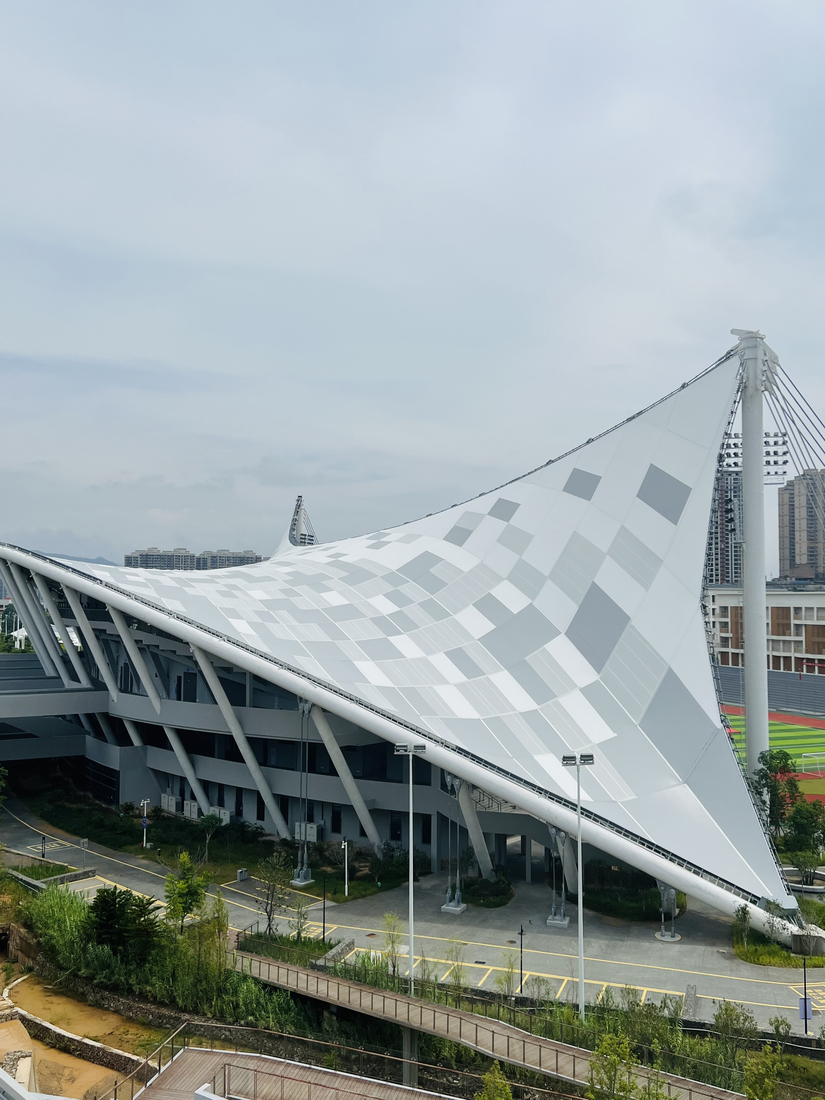
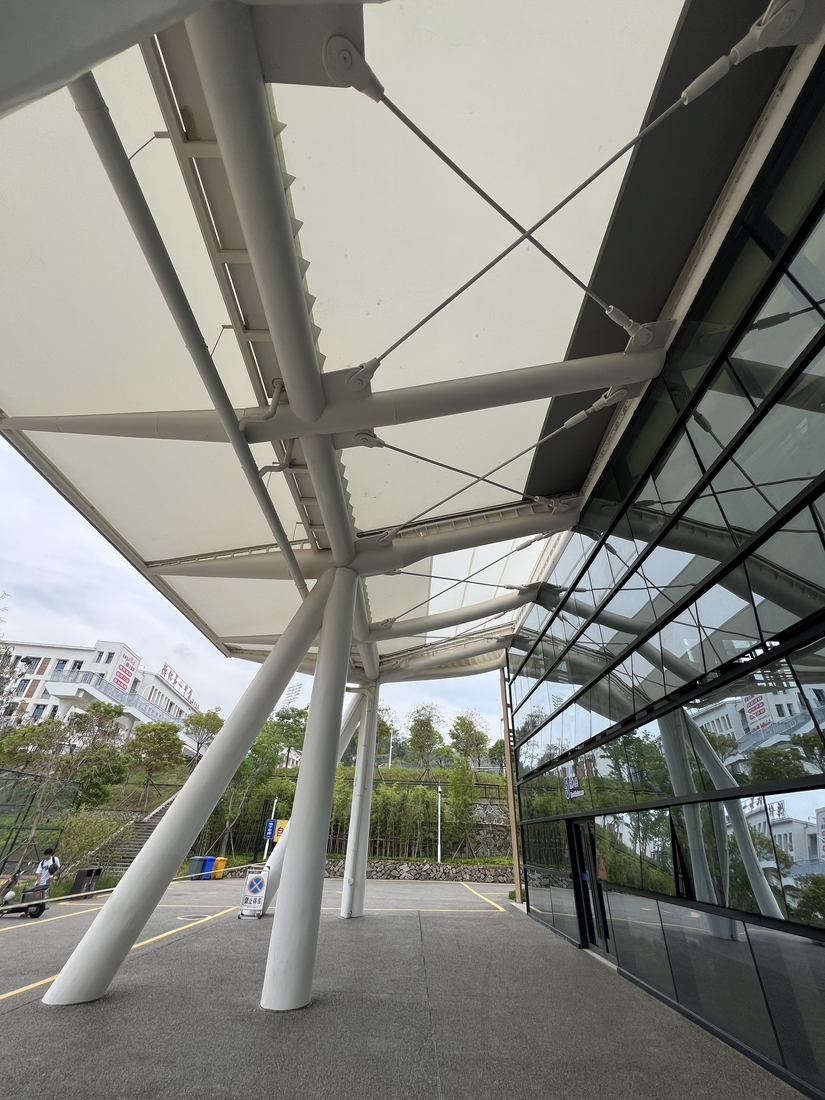
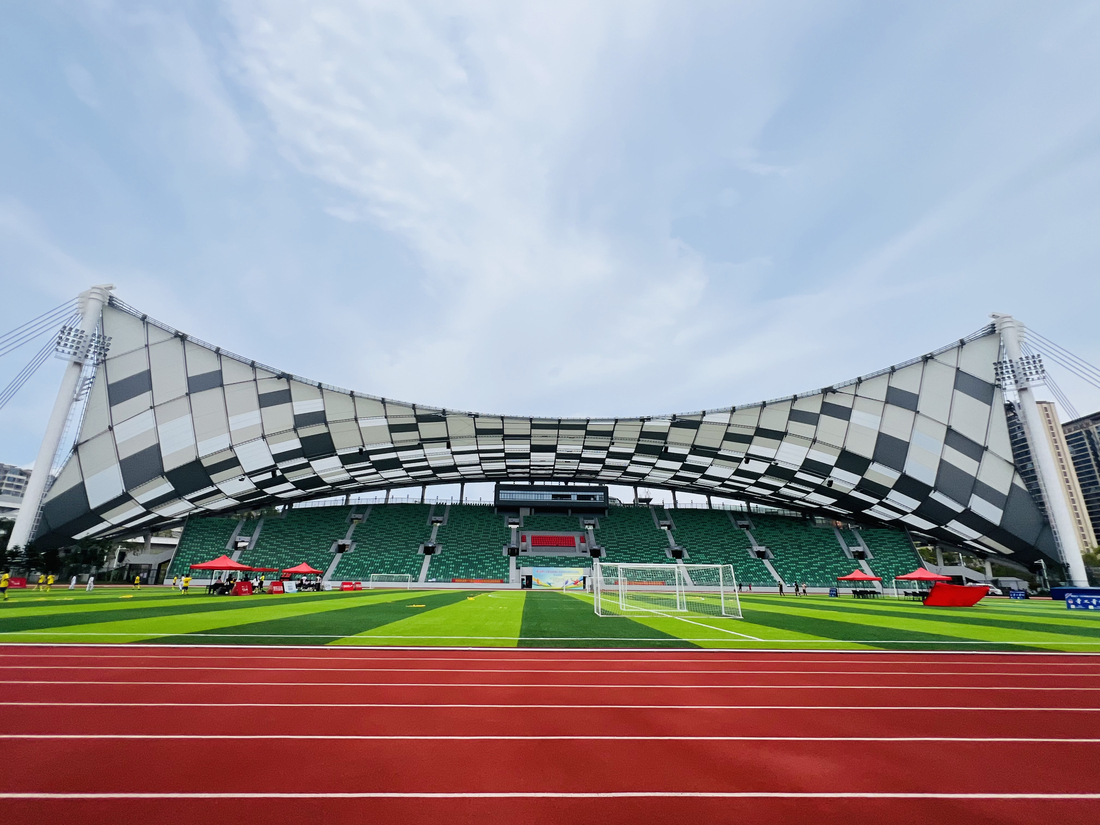
To harmonize with the site’s natural surroundings, the architects opted for lightweight structures, notably tensile textile roofs. The Xiatian Cultural and Sports Park was designed by the China Architecture Design & Research Group. The project’s chief architect, Cui Kai, explains his philosophy: “From an urban planning perspective, our goal was to create an architectural complex that reflects the character of a city shaped by mountains and water. With housing planned on the surrounding hills, we placed the stadium in the valley, also incorporating a flood-control function. The two sports halls were arranged around it, creating a landscape reminiscent of a mountain village. To respond to the natural environment, we chose lightweight structures, giving the impression of floating roofs within the landscape. The tensile structures allowed this visual lightness while ensuring natural light. At night, these translucent roofs become genuine decorative features of the cityscape.”
…leading to an architecture both light and rooted in the landscape
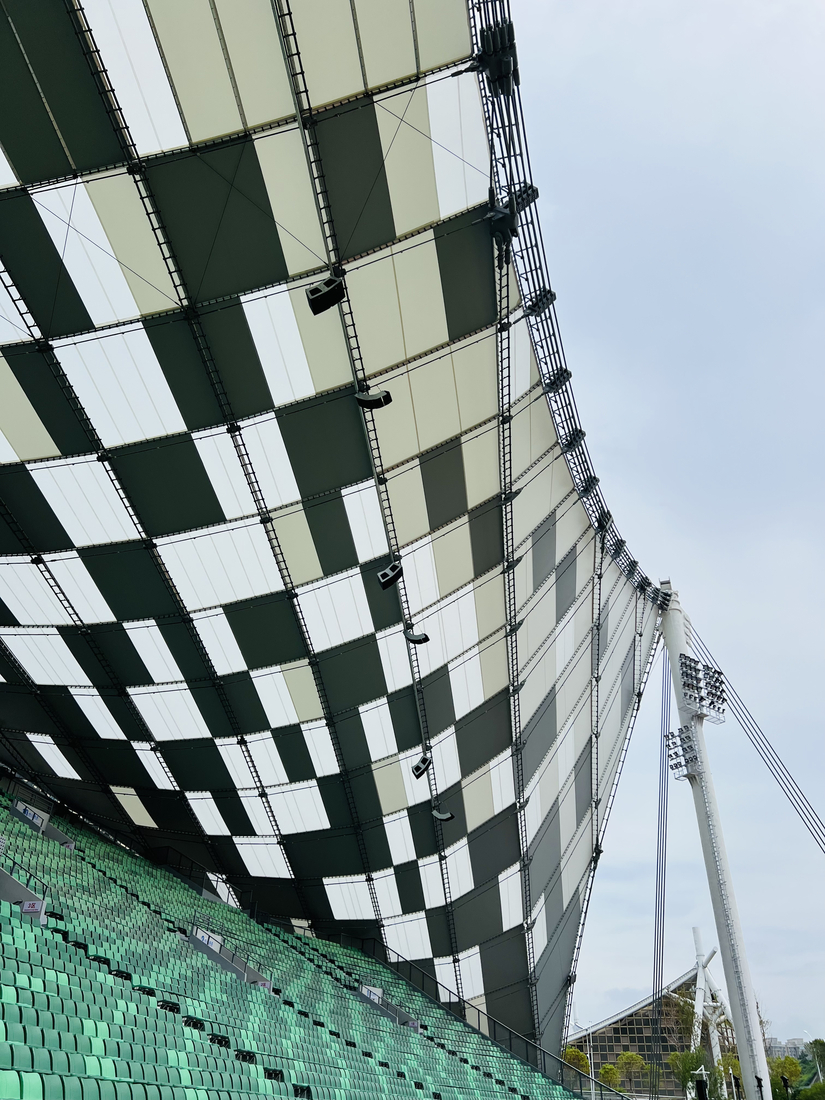
The stadium is the centerpiece of the project. Its curved roof, combining steel and textile, spans 170 meters with a maximum height of 50 meters. Three PTFE fiberglass membranes from Serge Ferrari were selected for the roof: Tenseo GF7000 (an opaque grey membrane), Tenseo GF7000 (a semi-transparent fabric), and Tenseo GFM-52.LT (a highly translucent mesh). This system ensures solar protection, visual comfort, and structural lightness.
Thermal and acoustic comfort in the indoor halls
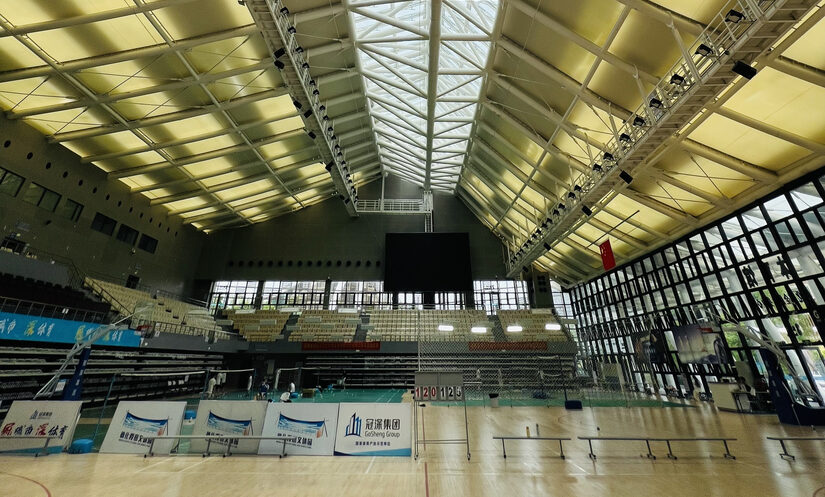
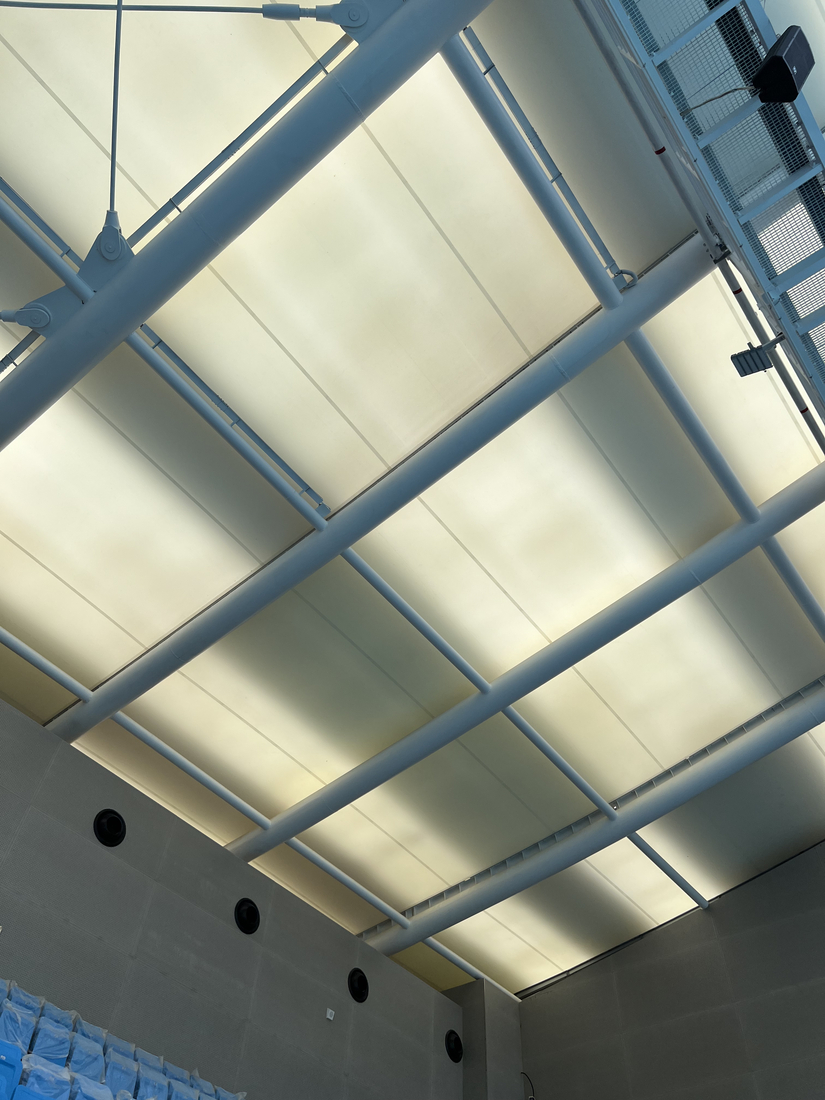
The gymnasium and swimming pool focus more on user comfort. They adopt a multilayer system consisting of an outer membrane, an aerogel insulation layer, and an inner membrane. This configuration delivers performances comparable to those of a traditional envelope while remaining lightweight. Alphalia Aw: a highly transparent acoustic inner membrane, used in the gymnasium to combine sound comfort and brightness. Flexlight 402HT: a luminous inner membrane, used in the swimming pool to create a warm atmosphere.
Serge Ferrari, at the heart of textile innovation
These materials combine durability, mechanical performance, UV resistance, and aesthetic customization, while also meeting environmental standards thanks to their EPD certification. With roofs floating in the valley like suspended sails, the park offers a new vision of public architecture: light, integrated into nature, high-performing, and focused on user well-being. The Xiatian Cultural and Sports Park thus embodies a new generation of public buildings in China.
Project participants:
Customers: Highbird/Sanxin
Architect / Designer: China Architecture Design & Research Group
Copyright: Eddy Yong HUANG